





 |
 |
 |
 |
 |
 |

This news section contains our releases and announcements for 2022 - 2005. They will be listed in reverse chronological order, starting with the most recent. You can click on the headline of interest to move forward to the desired release/announcement. To read the releases for 2004-1998, please click on this link.
2022:
- Success of the 1,956th launch of Soyuz
- Success of the 1,954th launch of Soyuz
2021:
- Flight ST37, the 15th operated by Arianespace in 2021, successfully placed 36 more OneWeb satellites into orbit
- Success of the 1,952nd launch of Soyuz
- Success of the 1,950th launch of Soyuz
- Success of the 1,949th launch of Soyuz
- Success of the 1,948th launch of Soyuz
- With Flight ST36, Arianespace sets a new mark; more than half of the OneWeb constellation now successfully deployed
- Success of the 1,946th launch of Soyuz
- With Flight ST35 for OneWeb, Arianespace sets a new mark by successfully putting more than 1,000 satellites in orbit since its foundation
- Success of the 1,944th launch of Soyuz
- Flight ST34 marks Arianespace’s third successful launch in less than one month
- Flight ST33: Arianespace successfully deploys 36 OneWeb constellation satellites
- Success of the 1,941st launch of Soyuz
- Success of the 1,940th launch of Soyuz
- Flight ST32: Arianespace successfully deploys OneWeb constellation satellites
- Flight ST31: Arianespace successfully deploys OneWeb constellation satellites
- Success of the 1,937th launch of Soyuz
- Success of the 1,935th launch of Soyuz
- Success of the 1,934th launch of Soyuz
- Success of the 1,933rd launch of Soyuz
- Success of the 1,932nd launch of Soyuz
2020:
- Success of the 1,929th launch of Soyuz
- Success of the 1,927th launch of Soyuz
- Success of the 1,926th launch of Soyuz
- Success of the 1,925th launch of Soyuz
- Success of the 1,924th launch of Soyuz
- Success of the 1,921st launch of Soyuz
- Success of the 1,919th launch of Soyuz
- Success of the 1,918th launch of Soyuz
2019:
- Success of the 1,915th launch of Soyuz
- Success of the 1,914th launch of Soyuz
- Success of the 1,913th launch of Soyuz
- Success of the 1,912th launch of Soyuz
- Success of the 1,911th launch of Soyuz
- Success of the 1,910th launch of Soyuz
- Success of the 1,909th launch of Soyuz
- Success of the 1,908th launch of Soyuz
- Success of the 1,907th launch of Soyuz
- Success of the 1,906th launch of Soyuz
- Success of the 1,905th launch of Soyuz
- Success of the 1,904th launch of Soyuz
- Success of the 1,902nd launch of Soyuz
- Success of the 1,901st launch of Soyuz
- Success of the 1,900th launch of Soyuz
- Success of the 1,899th launch of Soyuz
2018:
- Success of the 1,897th launch of Soyuz
- Success of the 1,895th launch of Soyuz
- Success of the 1,894th launch of Soyuz
- Success of the 1,893rd launch of Soyuz
- Success of the 1,892nd launch of Soyuz
- Success of the 1,890th launch of Soyuz
- Success of the 1,889th launch of Soyuz
- Success of the 1,888th launch of Soyuz
- Success of the 1,887th launch of Soyuz
- Success of the 1,886th launch of Soyuz
- Success of the 1,884th launch of Soyuz
- Success of the 1,883rd launch of Soyuz
2017:
- Success of the 1,882nd launch of Soyuz
- Success of the 1,881st launch of Soyuz
- Success of the 1,879th launch of Soyuz
- Success of the 1,878th launch of Soyuz
- Success of the 1,877th launch of Soyuz
- Success of the 1,876th launch of Soyuz
- Success of the 1,875th launch of Soyuz
- Success of the 1,872nd launch of Soyuz
- Success of the 1,870th launch of Soyuz
- Success of the 1,869th launch of Soyuz
2016:
- Success of the 1,866th launch of Soyuz
- Success of the 1,865th launch of Soyuz
- Success of the 1,864th launch of Soyuz
- Success of the 1,863rd launch of Soyuz
- Success of the 1,862nd launch of Soyuz
- Vostochny Cosmodrome debuts with the successful launch of Soyuz
- Success of the 1,858th launch of Soyuz
- Success of the 1,857th launch of Soyuz
- Success of the 1,856th launch of Soyuz
- Success of the 1,855th launch of Soyuz
- Success of the 1,854th launch of Soyuz2015:
- Success of the 1,853rd launch of Soyuz
- Success of the 1,851st launch of Soyuz
- Success of the 1,850th launch of Soyuz
- Success of the 1,849th launch of Soyuz
- Success of the 1,848th launch of Soyuz
- Success of the 1,846th launch of Soyuz
- Success of the 1,845th launch of Soyuz
- Success of the 1,844th launch of Soyuz
- Success of the 1,843rd launch of Soyuz
- Success of the 1,842nd launch of Soyuz
- Success of the 1,841st launch of Soyuz
- Success of the 1,838th launch of Soyuz
- Success of the 1,837th launch of Soyuz
2014:
- Success of the 1,836th launch of Soyuz
- Success of the 1,835th launch of Soyuz
- Success of the 1,833rd launch of Soyuz
- Success of the 1,832nd launch of Soyuz
- Success of the 1,831st launch of Soyuz
- Success of the 1,830th launch of Soyuz
- Success of the 1,829th launch of Soyuz
- Success of the 1,827th launch of Soyuz
- Success of the 1,826th launch of Soyuz
- Success of the 1,820th launch of Soyuz
- Success of the 1,819th launch of Soyuz
- Success of the 1,816th launch of Soyuz
- Success of the 1,815th launch of Soyuz
- Success of the 1,814th launch of Soyuz
2013:- Successful inaugural launch of the new Soyuz family launcher
- Success of the 1,812th launch of Soyuz
- Success of the 1,811th launch of Soyuz
- Success of the 1,810th launch of Soyuz
- Success of the 1,807th launch of Soyuz
- Stéphane Israël named Chairman and CEO of Starsem
- Success of the 1,806th launch of Soyuz
- Success of the 1,805th launch of Soyuz
- Success of the 1,804th launch of Soyuz
- Success of the 1,803rd launch of Soyuz
- Success of the 1,802nd launch of Soyuz
- Success of the 1,801st launch of Soyuz
- Success of the 1,800th launch of Soyuz
- Mission accomplished! Arianespace and Starsem orbit six new Globalstar-2 satellites
- Arianespace-Starsem Flight ST 26: Soyuz-Fregat – Globalstar-2; Postponed 24 hours2012:
- Success of the 1,798th launch of Soyuz
- Success of the 1,796th launch of Soyuz
- Success of the 1,795th launch of Soyuz
- Success of the 1,794th launch of Soyuz
- Starsem orbits Metop-B meteorological satellite
- Success of the 1,791st launch of Soyuz
- Success of the 1,790th launch of Soyuz
- Success of the 1,789th launch of Soyuz
- Annual General Meeting of Shareholders appoints new Board of Directors
- Starsem launch of MetOp-B scheduled for September 19
- Success of the 1,788th launch of Soyuz
- Success of the 1,787th launch of Soyuz
- Launch Starsem ST25 – MetOp-B
- Success of the 1,786th launch of Soyuz
- Success of the 1,785th launch of Soyuz2011:
- Mission accomplished! Arianespace and Starsem orbit six new Globalstar-2 satellites
- Arianespace-Starsem Flight ST 23; Soyuz-Fregat – Globalstar-2: The launch is now scheduled for Wednesday, July 13
- Arianespace-Starsem Flight ST 23; Soyuz-Fregat – Globalstar-2: Launch postponed 24 hours
- Success of the 1,768th launch of Soyuz
- Success of the 1,767th launch of Soyuz
- Success of the 1,766th launch of Soyuz2010:
- Success of the 1,764th launch of Soyuz
- Mission accomplished! Arianespace and Starsem orbit first six Globalstar-2 satellites
- Success of the 1,760th launch of Soyuz
- Success of the 1,759th launch of Soyuz
- Success of the 1,758th launch of Soyuz
- Success of the 1,757th launch of Soyuz
- Success of the 1,754th launch of Soyuz
- Success of the 1,753rd launch of Soyuz2009-2008:
- Success of the 1,752nd launch of Soyuz
- Success of the 1,751st launch of Soyuz
- Success of the 1,750th launch of Soyuz
- Success of the 1,749th launch of Soyuz
- Success of the 1,747th launch of Soyuz
- Annual General Meeting of Shareholders
- Success of the 1,736th launch of Soyuz
- Success of the 1,735th launch of Soyuz
- Success of the 1,734th launch of Soyuz
- Success of the 1,733rd launch of Soyuz
- Starsem successfully launches second Europe navigation satellite
- Success of the 1,731st launch of Soyuz
- Success of the 1,730th launch of Soyuz2007:
- Success of the 1,729th launch of Soyuz
- Starsem successfully launches Radarsat-2 satellite
- Success of the 1,727th launch of Soyuz
- Starsem successfully launches four Globalstar satellites
- Success of the 1,725th launch of Soyuz
- Success of the 1,724th launch of Soyuz
- Success of the 1,723rd launch of Soyuz
- Success of the 1,722nd launch of Soyuz
- Starsem successfully launches Globalstar satellites
- Reorganization at Starsem
- Success of the 1,720th launch of Soyuz
- Success of the 1,719th launch of Soyuz
- Success of the 1,718th launch of Soyuz2006:
- Success of the 1,717th launch of Soyuz
- Success of the 1,716th launch of Soyuz
- Success of the 1,715th launch of Soyuz
- Starsem successfully launches MetOp-A
- Soyuz-MetOp: new launch attempt on Thursday, 19 October
- Soyuz-MetOp: Launch postponement
- Soyuz-MetOp: new launch attempt on Wednesday, 18 October
- MetOp-A launch now scheduled on Tuesday, October 17
- MetOp-A launch postponed several days
- Success of the 1,713th launch of Soyuz
- Success of the 1,712th launch of Soyuz
- Success of the 1,711th launch of Soyuz
- Launch postponement for the MetOp-A satellite
- MetOp-A: launch postponed
- MetOp-A satellite launch
- Postponement of the MetOp-A launch
- MetOp-A: launch postponed
- Success of the 1,710th launch of Soyuz
- Success of the 1,709th launch of Soyuz
- Starsem Annual Shareholders' Meeting: Renewal of the Board of Directors
- Success of the 1,708th launch of Soyuz
- Success of the 1,707th launch of Soyuz
- Success of the 1,706th launch of Soyuz
- Ready to accommodate Soyuz-ST
- Soyuz to launch Radarsat-22005:
- Starsem successfully launches Venus Express
- Venus Express launch set for November 9
- Venus Express postponed several days
- Globalstar has reaffirmed its confidence in Soyuz
- Success of the 1,702nd launch of Soyuz
- Success of the 1,701st launch of Soyuz
- Success of the 1,700th launch of Soyuz
- Mission success for Starsem and Arianespace: the Galaxy 14 satellite is in orbit
- Success of the 1,697th launch of Soyuz
- Success of the 1,696th launch of Soyuz
- Success of the 1,695th launch of Soyuz
- Reorganization at Starsem
- Success of the 1,694th launch of Soyuz
Success of the 1,956th launch of Soyuz
Baikonur cosmodrome, February 15, 2022
The 1,956th flight of a Soyuz launch vehicle was performed on Tuesday, 15 February 2022 from the Baikonur cosmodrome in Kazakhstan at 07:25 Moscow time (05:25 Paris time).
The Progress MS-19 cargo spacecraft was accurately placed on the target orbit for another mission to the International Space Station. This was the third Soyuz family mission in 2022.
Success of the 1,954th launch of Soyuz
Plesetsk cosmodrome, February 5, 2022
The 1,954th flight of a Soyuz launch vehicle was performed on Saturday, 5 February 2022 from the Plesetsk cosmodrome in Russia at 10:00 Moscow time (08:00 Paris time).
The governmental spacecraft was accurately placed on the target orbit. This was the first Soyuz family mission in 2022.
Flight ST37, the 15th operated by Arianespace in 2021, successfully placed 36 more OneWeb satellites into orbit
Baikonur Cosmodrome, December 27, 2021
- Thanks to ST37, 60% of OneWeb’s constellation is now in orbit, bringing the constellation to 394 satellites launched.
- Thanks to ST37, Arianespace have conducted 15 launches in 2021, including eight missions for the benefit of OneWeb and a total of nine Soyuz flights, from three different spaceports.
- This launch also marks a new milestone in Arianespace history: since its creation in 1980, the company has officially deployed 1,101 satellites.
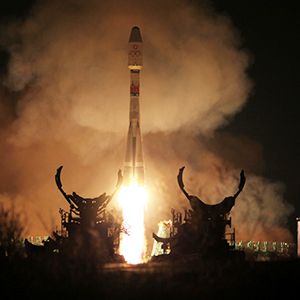 On Monday, December 27, at precisely 06:10 p.m. local time at Russia’s Baikonur Cosmodrome (01:10 p.m. UTC), Soyuz flight ST37 lifted-off with 36 OneWeb satellites bringing, after this successful deployment, the size of the fleet in orbit to 394. Flight ST37 was the 63rd Soyuz mission carried out by Arianespace, the 37th with its Starsem affiliate, and the 12th mission for OneWeb.
The mission lasted three hours and 45 minutes. The 36 satellites were deployed during nine separation sequences, at an altitude of 450 km. It was also the fifteenth successful launch operated by Arianespace’s teams this year, bringing to 1,101 the total number of spacecraft orbited since the start of the company’s operations.
“It is a very special time of the year, right between Christmas and New Year’s Eve. I would like to warmly thank all the Arianespace and Starsem teams involved in this mission and the incredible work they did alongside our Russian partners in order to allow us to launch, from Baikonour Cosmodrome, our 15th and last launch of 2021. This year has been marked by key milestones, the latest one being that, with today’s flight, we will officially have deployed more than 60% of OneWeb’s constellation,” said Stéphane Israël, CEO of Arianespace. “2021 has been a really busy year for us with 15 launches operated from three different spaceports, which represents a 50% increase in launches over 2020. With 2022 headed in the same direction, we are sure to demonstrate that our services and solutions answer our clients’ needs: any time, any mass, any orbit.”
Today’s launch, Arianespace’s 12th for OneWeb, also was the first time Soyuz delivered 36 satellites –instead of the usual 34- from the Baikonour Cosmodrome. This improvement of the efficiency of the flight itself will allow Arianespace to better and more quickly serve the needs of OneWeb. To obtain this result, the team worked to improve every step in the plan: from the manufacturing process to launch vehicle integration and mission programing.
OneWeb’s mission is to create a global connectivity platform through a next-generation satellite constellation in Low Earth Orbit. The OneWeb constellation will deliver high-speed, low-latency connectivity to a wide range of customer sectors, including aviation, maritime, enterprise and government. Central to its purpose, OneWeb seeks to bring connectivity to the hardest to reach places, where fiber cannot reach, and thereby bridge the digital divide.
The satellite prime contractor is OneWeb Satellites, a joint venture of OneWeb and Airbus Defence and Space. The satellites were produced in Florida, USA, in its leading-edge satellite manufacturing facilities that can build up to two satellites per day on a series production line dedicated to spacecraft assembly, integration, and testing.
The launch of the satellites was operated by Arianespace and its Euro-Russian affiliate Starsem under contract with Glavkosmos, a subsidiary of Roscosmos, the Russian space agency. Arianespace is responsible for the overall mission and flight-worthiness, with the support of Starsem for launch campaign activities including management of its own launch facilities at the Baikonur Cosmodrome. RKTs-Progress (the Samara Space Center) is responsible for the design, development, manufacture and integration of the Soyuz launch vehicle as well as for the 3-stage Soyuz flight. NPO Lavotchkin is responsible for the launch preparation operations and flight of the Fregat orbital vehicle.
About Starsem
Starsem is dedicated to providing international commercial marketing and operation of the Soyuz launch vehicle from the Baikonur cosmodrome. Shareholders in Starsem are Arianespace, ArianeGroup, the State Space Corporation ROSCOSMOS and the Samara Space Center “RKTs-Progress”. www.starsem.com
About Arianespace
Arianespace uses space to make life better on Earth by providing launch services for all types of satellites into all orbits. It has orbited more than 1,100 satellites since 1980, using its family of three launchers, Ariane, Soyuz and Vega, from launch sites in French Guiana (South America) and from the Russian cosmodromes in Baikonur and Vostochny. Arianespace is headquartered in Evry, near Paris, and has a technical facility at the Guiana Space Center in French Guiana, plus local offices in Washington, D.C., Tokyo and Singapore. Arianespace is a subsidiary of ArianeGroup, which holds 74% of its share capital, with the balance held by 15 other shareholders from the European launcher industry. www.arianespace.com
Success of the 1,952nd launch of Soyuz
Baikonur cosmodrome, December 8, 2021
The 1,952nd flight of a Soyuz launch vehicle was performed on Wednesday, 8 December 2021 from the Baikonur cosmodrome in Kazakhstan at 10:38 Moscow time (08:38 Paris time).
The Soyuz MS-20 manned transport spacecraft was accurately placed on the target orbit for another mission to the International Space Station. This was the twenty first Soyuz family mission in 2021.
Success of the 1,950th launch of Soyuz
Plesetsk cosmodrome, November 25, 2021
The 1,950th flight of a Soyuz launch vehicle was performed on Thursday, 25 November 2021 from the Plesetsk cosmodrome in Russia at 04:09 Moscow time (02:09 Paris time).
The governmental spacecraft was accurately placed on the target orbit. This was the nineteenth Soyuz family mission in 2021.
Success of the 1,949th launch of Soyuz
Baikonur cosmodrome, November 24, 2021
The 1,949th flight of a Soyuz launch vehicle was performed on Wednesday, 24 November 2021 from the Baikonur cosmodrome in Kazakhstan at 16:06 Moscow time (14:06 Paris time).
The Prichal nodal module for the Russian segment of the ISS was accurately placed on the target orbit for another mission to the International Space Station. This was the eighteenth Soyuz family mission in 2021.
Success of the 1,948th launch of Soyuz
Baikonur cosmodrome, October 28, 2021
The 1,948th flight of a Soyuz launch vehicle was performed on Thursday, 28 October 2021 from the Baikonur cosmodrome in Kazakhstan at 03:00 Moscow time (02:00 Paris time).
The Progress MS-18 cargo spacecraft was accurately placed on the target orbit for another mission to the International Space Station. This was the seventeenth Soyuz family mission in 2021.
With Flight ST36, Arianespace sets a new mark; more than half of the OneWeb constellation now successfully deployed
Vostochny Cosmodrome, October 14, 2021
- Arianespace has successfully performed Soyuz Flight ST36. This latest launch for OneWeb’s placed 36 more satellites into orbit.
- ST36 represents an important step in OneWeb and Arianespace’s partnership: the operator now has more than half, 358 satellites, of its constellation on orbit.
- ST36 is the 10th launch of Arianespace in 2021.
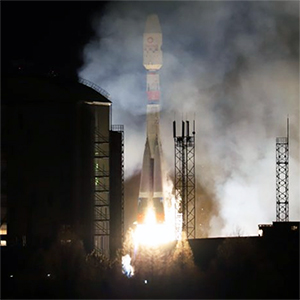 Performed on Thursday, October 14 at precisely 6:40 pm. local time at Russia’s Vostochny Cosmodrome (9:40 a.m. UTC), Soyuz Flight ST36 lifted-off with 36 OneWeb satellites onboard, bringing the size of the fleet in orbit to 358, after this successful deployment. Flight ST36 was the 61st Soyuz mission carried out by Arianespace and its Starsem affiliate. The mission lasted three hours and 51 minutes. The 36 satellites were deployed during nine separation sequences, at an altitude of 450 km.
“Congratulations to all the teams who made this eleventh launch dedicated to OneWeb’s satellites a success,” said Stéphane Israël, CEO of Arianespace. “ST36 marks a new milestone in our common history. Precisely one hour and eighteen minutes after liftoff, during the first separation sequence, we officially crossed the halfway mark for OneWeb’s constellation deployment! By the end of 2022, we will proudly operate eight more Soyuz launches in order to complete full the deployment of the constellation.”
OneWeb’s mission is to create a global connectivity platform through a next-generation satellite constellation in Low Earth Orbit. The OneWeb constellation will deliver high-speed, low-latency connectivity to a wide range of customer sectors, including aviation, maritime, enterprise and government. Central to its purpose, OneWeb seeks to bring connectivity to the hardest to reach places, where fiber cannot reach, and thereby bridge the digital divide.
The satellite prime contractor is OneWeb Satellites, a joint venture of OneWeb and Airbus Defence and Space. The satellites were produced in Florida, USA in its leading-edge satellite manufacturing facilities that can build up to two satellites per day on a series production line dedicated to spacecraft assembly, integration, and testing.
The launch of the satellites was operated by Arianespace and its Euro-Russian affiliate Starsem under contract with Glavkosmos, a subsidiary of Roscosmos, the Russian space agency. Arianespace is responsible for the overall mission and flight-worthiness, with the support of Starsem for launch campaign activities including management of its own launch facilities at the Baikonur Cosmodrome. RKTs-Progress (the Samara Space Center) is responsible for the design, development, manufacture and integration of the Soyuz launch vehicle as well as for the 3-stage Soyuz flight. NPO Lavotchkin is responsible for the launch preparation operations and flight of the Fregat orbital vehicle.
About Starsem
Starsem is dedicated to providing international commercial marketing and operation of the Soyuz launch vehicle from the Baikonur cosmodrome. Shareholders in Starsem are Arianespace, ArianeGroup, the State Space Corporation ROSCOSMOS and the Samara Space Center “RKTs-Progress.” www.starsem.com
Arianespace uses space to make life better on Earth by providing launch services for all types of satellites into all orbits. It has orbited more than 1,000 satellites since 1980, using its family of three launchers, Ariane, Soyuz and Vega, from launch sites in French Guiana (South America) and from the Russian cosmodromes in Baikonur and Vostochny. Arianespace is headquartered in Evry, near Paris, and has a technical facility at the Guiana Space Center in French Guiana, plus local offices in Washington, D.C., Tokyo and Singapore. Arianespace is a subsidiary of ArianeGroup, which holds 74% of its share capital, with the balance held by 15 other shareholders from the European launcher industry. www.arianespace.com
Success of the 1,946th launch of Soyuz
Baikonur cosmodrome, October 5, 2021
The 1,946th flight of a Soyuz launch vehicle was performed on Tuesday, 5 October 2021 from the Baikonur cosmodrome in Kazakhstan at 11:55 Moscow time (10:55 Paris time).
The Soyuz MS-19 manned transport spacecraft was accurately placed on the target orbit for another mission to the International Space Station. This was the fifteenth Soyuz family mission in 2021.
With Flight ST35 for OneWeb, Arianespace sets a new mark by successfully putting more than 1,000 satellites in orbit since its foundation
Baikonur Cosmodrome, September 14, 2021
- Soyuz Flight ST35 placed 34 more satellites into orbit. Following this 10th launch for OneWeb, Arianespace has deployed 322 satellites for the global connectivity constellation.
- Ninth successful launches and sixth Soyuz operated by Arianespace and Starsem since the start of the year.
- With this launch, Arianespace will have deployed 1,021 satellite since its incorporation in 1980.
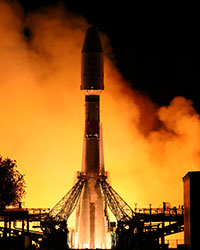 Performed on Tuesday, September 14, at precisely 11:07 p.m. local time at Russia’s Baikonur Cosmodrome (06:07 p.m. UTC), Soyuz Flight ST35 lifted-off with 34 OneWeb satellites onboard, bringing, after the successful deployment, the size of the fleet in orbit to 322. Flight ST35 was the 60th Soyuz mission carried out by Arianespace and its Starsem affiliate, and the tenth mission to the benefit of OneWeb.
The mission lasted three hours and 45 minutes. The 34 satellites were deployed during nine separation sequences, at an altitude of 450 km. It was also the ninth successful launch operated by Arianespace’s teams this year, bringing to 1,021 the total number of spacecraft orbited since the start of company’s operations.
“Congratulations to all the teams who made this 60th launch with Soyuz, the 10th for OneWeb, a success. We are living a great moment today as we pass the step of our 1,000th satellite launched to space while our customer OneWeb is hitting a new pace with more than 300 satellites in orbit. This 1,000th satellite was named XiliaSat by our community in reference of the meaning of 1,000 in ancient Greek in a contest on our social media,” said Stéphane Israël, CEO of Arianespace. “This launch illustrates the recent acceleration in space operation – one third of these 1,000 Arianespace-launched satellites orbited over the 20 past months – and thus it is incumbent upon us, as leaders in the space sector, to embrace our responsibility to promote sustainable space operations.”
To date, Arianespace has launched 322 OneWeb satellites with ten Soyuz launches. Arianespace will perform nine more Soyuz launches for OneWeb through 2021 and 2022. These launches will enable OneWeb to complete the deployment of its full global constellation (650 satellites) in low Earth orbit by year-end 2022.
OneWeb’s mission is to create a global connectivity platform through a next-generation satellite constellation in Low Earth Orbit. The OneWeb constellation will deliver high-speed, low-latency connectivity to a wide range of customer sectors, including aviation, maritime, enterprise and government. Central to its purpose, OneWeb seeks to bring connectivity to the hardest to reach places, where fiber cannot reach, and thereby bridge the digital divide.
The satellite prime contractor is OneWeb Satellites, a joint venture of OneWeb and Airbus Defence and Space. The satellites were produced in Florida, USA, in its leading-edge satellite manufacturing facilities that can build up to two satellites per day on a series production line dedicated to spacecraft assembly, integration, and testing.
The launch of the satellites was operated by Arianespace and its Euro-Russian affiliate Starsem under contract with Glavkosmos, a subsidiary of Roscosmos, the Russian space agency.
Arianespace is responsible for the overall mission and flight-worthiness, with the support of Starsem for launch campaign activities including management of its own launch facilities at the Baikonur Cosmodrome.
RKTs-Progress (the Samara Space Center) is responsible for the design, development, manufacture and integration of the Soyuz launch vehicle as well as for the 3-stage Soyuz flight. NPO Lavotchkin is responsible for the launch preparation operations and flight of the Fregat orbital vehicle.
About Starsem
Starsem is dedicated to providing international commercial marketing and operation of the Soyuz launch vehicle from the Baikonur cosmodrome. Shareholders in Starsem are Arianespace, ArianeGroup, the State Space Corporation ROSCOSMOS and the Samara Space Center “RKTs-Progress.” www.starsem.com
About Arianespace
Arianespace uses space to make life better on Earth by providing launch services for all types of satellites into all orbits. It has orbited more than 1,000 satellites since 1980, using its family of three launchers, Ariane, Soyuz and Vega, from launch sites in French Guiana (South America) and from the Russian cosmodromes in Baikonur and Vostochny. Arianespace is headquartered in Evry, near Paris, and has a technical facility at the Guiana Space Center in French Guiana, plus local offices in Washington, D.C., Tokyo and Singapore. Arianespace is a subsidiary of ArianeGroup, which holds 74% of its share capital, with the balance held by 15 other shareholders from the European launcher industry. www.arianespace.com
Success of the 1,944th launch of Soyuz
Plesetsk cosmodrome, September 9, 2021
The 1,944th flight of a Soyuz launch vehicle (Soyuz light version 2.1v) was performed on Thursday, 9 September 2021 from the Plesetsk cosmodrome in Russia at 22:59 Moscow time (21:59 Paris time).
The governmental spacecraft was accurately placed on the target orbit. This was the thirteenth Soyuz family mission in 2021.
Flight ST34 marks Arianespace’s third successful launch in less than one month
Baikonur Cosmodrome, August 22, 2021
- Arianespace just successfully performed Soyuz Flight ST34. This latest launch for OneWeb’s places 34 more satellites into orbit.
- Following Ariane 5 VA254 and Vega VV19, ST34 is Arianespace’s third successful mission, with three different launchers, in less than one month, precisely 23 days. With these three missions, Arianespace has placed 41 satellites ranging from 1,4 kg up to 6.190kg into three different orbits (GEO, SSO and LEO) for the benefit of six clients.
- Following this 9th launch for OneWeb, Arianespace has deployed 288 satellites in Low Earth Orbit for their constellation.
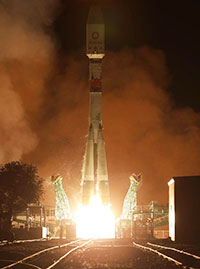 Performed on Sunday, August 22 at precisely 3:13 a.m. local time at Russia’s Baikonur Cosmodrome (10:13 p.m. UTC on August 21), Soyuz Flight ST34 lifted-off with 34 OneWeb satellites onboard, bringing, after the successful deployment, the size of the fleet in orbit to 288. Flight ST34 was the 59th Soyuz mission carried out by Arianespace and its Starsem affiliate. The mission lasted three hours and 45 minutes. The 34 satellites have been separated, during nine separation sequences, at an altitude of 450 km. It was also the third successful launch operated by Arianespace’s teams in less than one month.
“Congratulations to all the teams who made this ninth launch dedicated to OneWeb’s satellites a success,” said Stéphane Israël, CEO of Arianespace. “Every single mission is special, but ST34 is the demonstration of our ability, no matter when or where, to deliver the best possible service! We operated three successful launches from two continents in precisely 23 days -less than one month-, with three different launchers, Ariane 5, Vega and Soyuz. Any time, any mass, any orbit: this is once again what we achieved to the benefit of our customers!”
To date, Arianespace has launched 288 OneWeb satellites with nine Soyuz launches. Arianespace will perform 10 more Soyuz launches for OneWeb through 2021 and 2022. These launches will enable OneWeb to complete the deployment of its full global constellation of low Earth orbit satellites before the end of 2022.
OneWeb’s mission is to create a global connectivity platform through a next-generation satellite constellation in Low Earth Orbit. The OneWeb constellation will deliver high-speed, low-latency connectivity to a wide range of customer sectors, including aviation, maritime, enterprise and government. Central to its purpose, OneWeb seeks to bring connectivity to the hardest to reach places, where fiber cannot reach, and thereby bridge the digital divide.
The satellite prime contractor is OneWeb Satellites, a joint venture of OneWeb and Airbus Defence and Space. The satellites were produced in Florida, USA in its leading-edge satellite manufacturing facilities that can build up to two satellites per day on a series production line dedicated to spacecraft assembly, integration, and testing.
The launch of the satellites was operated by Arianespace and its Euro-Russian affiliate Starsem under contract with Glavkosmos, a subsidiary of Roscosmos, the Russian space agency. Arianespace is responsible for the overall mission and flight-worthiness, with the support of Starsem for launch campaign activities including management of its own launch facilities at the Baikonur Cosmodrome. RKTs-Progress (the Samara Space Center) is responsible for the design, development, manufacture and integration of the Soyuz launch vehicle as well as for the 3-stage Soyuz flight. NPO Lavotchkin is responsible for the launch preparation operations and flight of the Fregat orbital vehicle.
About Starsem
Starsem is dedicated to providing international commercial marketing and operation of the Soyuz launch vehicle from the Baikonur cosmodrome. Shareholders in Starsem are Arianespace, ArianeGroup, the State Space Corporation ROSCOSMOS and the Samara Space Center “RKTs-Progress.” www.starsem.com
About Arianespace
Arianespace uses space to make life better on Earth by providing launch services for all types of satellites into all orbits. It has orbited more than 900 satellites since 1980, using its family of three launchers, Ariane, Soyuz and Vega, from launch sites in French Guiana (South America) and from the Russian cosmodromes in Baikonur and Vostochny. Arianespace is headquartered in Evry, near Paris, and has a technical facility at the Guiana Space Center in French Guiana, plus local offices in Washington, D.C., Tokyo and Singapore. Arianespace is a subsidiary of ArianeGroup, which holds 74% of its share capital, with the balance held by 15 other shareholders from the European launcher industry. www.arianespace.com
Flight ST33: Arianespace successfully deploys 36 OneWeb constellation satellites
Vostochny Cosmodrome, July 1, 2021
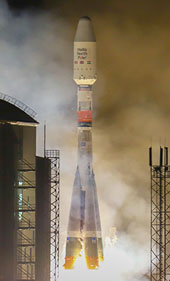 Performed on Thursday, July 1st at precisely 09:48 p.m. local time at Russia’s Vostochny Cosmodrome (12:48 p.m. UTC), Soyuz Flight ST33 lifted-off with 36 new OneWeb satellites onboard, bringing after the successful deployment the size of the fleet in orbit to 254. Flight ST33 was the 58th Soyuz mission carried out by Arianespace and its Starsem affiliate.
“This new launch was very special, marking the completion of OneWeb’s ‘Five to 50’ ambition to bring into orbit the satellites required to enable connectivity services to the 50th parallel and above by years end which includes Canada, U.K., Northern Europe, Alaska and Arctic regions,” said Stéphane Israël, Chief Executive Officer of Arianespace and Starsem. “Congratulations to all the teams who made this eighth launch dedicated to OneWeb’s satellites a success!”
Arianespace has launched 254 OneWeb satellites through eight Soyuz launches to date. Arianespace will perform 11 more Soyuz launches for OneWeb through 2021 and 2022. These launches will enable OneWeb to complete the deployment of its full global constellation of low Earth orbit satellites before the end of 2022.
OneWeb’s mission is to create a global connectivity platform through a next-generation satellite constellation in low Earth orbit. The OneWeb constellation will deliver high-speed, low-latency connectivity to a wide range of customer sectors, including aviation, maritime, enterprise and governments. Central to its purpose, OneWeb seeks to bring connectivity to the hardest to reach places, where fiber cannot reach, and thereby bridge the digital divide.
The satellite prime contractor is OneWeb Satellites, a joint venture of OneWeb and Airbus Defence and Space. The satellites were produced in Florida, USA in its leading-edge satellite manufacturing facilities that can build up to two satellites per day on a series production line dedicated to spacecraft assembly, integration, and testing.
About Starsem
Starsem is dedicated to providing international commercial marketing and operation of the Soyuz launch vehicle from the Baikonur cosmodrome. Shareholders in Starsem are Arianespace, ArianeGroup, the State Space Corporation ROSCOSMOS and the Samara Space Center "RKTs-Progress". www.starsem.com
About Arianespace
Arianespace uses space to make life better on Earth by providing launch services for all types of satellites into all orbits. It has orbited more than 900 satellites since 1980, using its family of three launchers, Ariane, Soyuz and Vega, from launch sites in French Guiana (South America) and from the Russian cosmodromes in Baikonur and Vostochny. Arianespace is headquartered in Evry, near Paris, and has a technical facility at the Guiana Space Center in French Guiana, plus local offices in Washington, D.C., Tokyo and Singapore. Arianespace is a subsidiary of ArianeGroup, which holds 74% of its share capital, with the balance held by 15 other shareholders from the European launcher industry. www.arianespace.com
Success of the 1,941st launch of Soyuz
Baikonur cosmodrome, June 30, 2021
The 1,941st flight of a Soyuz launch vehicle was performed on Wednesday, 30 June 2021 from the Baikonur cosmodrome in Kazakhstan at 02:27 Moscow time (01:27 Paris time).
The Progress MS-17 cargo spacecraft was accurately placed on the target orbit for another mission to the International Space Station. This was the tenth Soyuz family mission in 2021.
Success of the 1,940th launch of Soyuz
Plesetsk cosmodrome, June 25, 2021
The 1,940th flight of a Soyuz launch vehicle was performed on Friday, 25 June 2021 from the Plesetsk cosmodrome in Russia at 22:50 Moscow time (21:50 Paris time).
The governmental spacecraft was accurately placed on the target orbit. This was the ninth Soyuz family mission in 2021.
Flight ST32: Arianespace successfully deploys OneWeb constellation satellites
Vostochny Cosmodrome, May 29, 2021
• OneWeb’s new launch overall places 36 new constellation satellites into orbit.
• Following the 7th launch for OneWeb, Arianespace has deployed 218 satellites in low Earth orbit for the constellation.
Performed on Friday, May 29 at precisely 02:38 a.m. local time at Russia’s Vostochny Cosmodrome (05:38 p.m. on May 28, UTC), Soyuz Flight ST32 orbited 36 new OneWeb satellites – bringing the size of the fleet in orbit to 218. Flight ST32 was the 57th Soyuz mission carried out by Arianespace and its Starsem affiliate.
“Congratulations to all the teams who made this seventh launch dedicated to OneWeb’s satellites a success,” said Stéphane Israël, Chief Executive Officer of Arianespace and Starsem. “At Arianespace, we embrace the idea that space should serve the ultimate goal to creating a better life on Earth… By supporting OneWeb’s success, anywhere, at any time I am convinced that we do just so.”
Arianespace has launched 218 OneWeb satellites through seven Soyuz launches to date. Arianespace will perform 12 more Soyuz launches through 2021 and 2022. These launches will enable OneWeb to complete the deployment of its full global constellation of low Earth orbit satellites before the end of 2022.
OneWeb’s mission is to create a global connectivity platform through a next-generation satellite constellation in low Earth orbit. The OneWeb constellation will deliver high-speed, low-latency connectivity to a wide range of customer sectors, including aviation, maritime, enterprise and governments. Central to its purpose, OneWeb seeks to bring connectivity to the hardest to reach places, where fiber cannot reach, and thereby bridge the digital divide.
The satellite prime contractor is OneWeb Satellites, a joint venture of OneWeb and Airbus Defence and Space. The satellites were produced in Florida, USA in its leading-edge satellite manufacturing facilities that can build up to two satellites per day on a series production line dedicated to spacecraft assembly, integration, and testing.
About Starsem
Starsem is dedicated to providing international commercial marketing and operation of the Soyuz launch vehicle from the Baikonur cosmodrome. Shareholders in Starsem are Arianespace, ArianeGroup, the State Space Corporation ROSCOSMOS and the Samara Space Center "RKTs-Progress".
About Arianespace
Arianespace uses space to make life better on Earth by providing launch services for all types of satellites into all orbits. It has orbited almost 800 satellites since 1980, using its family of three launchers, Ariane, Soyuz and Vega, from launch sites in French Guiana (South America) and from the Russian cosmodromes in Baikonur and Vostochny. Arianespace is headquartered in Evry, near Paris, and has a technical facility at the Guiana Space Center in French Guiana, plus local offices in Washington, D.C., Tokyo and Singapore. Arianespace is a subsidiary of ArianeGroup, which holds 74% of its share capital, with the balance held by 15 other shareholders from the European launcher industry.
Flight ST31: Arianespace successfully deploys OneWeb constellation satellites
Vostochny Cosmodrome, April 26, 2021
• OneWeb’s sixth launch overall places 36 new constellation satellites into orbit.
• Arianespace has resumed the deployment of this client's satellite network, which now comprises 182 satellites in low Earth orbit.
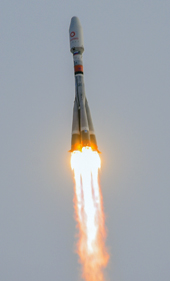 Performed on Monday, April 26 at precisely 07:14 a.m. local time at Russia’s Vostochny Cosmodrome (22:14 a.m. on April 25, UTC), Soyuz Flight ST31 orbited 36 new OneWeb satellites – bringing the size of the fleet in orbit to 182. Flight ST31 was the 56th Soyuz mission carried out by Arianespace and its Starsem affiliate.
“Congratulations to all the teams who made this latest mission from the Vostochny Cosmodrome a success. This launch again confirms Arianespace's ability to deploy the OneWeb constellation through the use of three different Soyuz launch sites – in French Guiana, Kazakhstan and Russia,” said Stéphane Israël, Chief Executive Officer of Arianespace. "I want to sincerely thank OneWeb for its trust. I am delighted that our company has contributed – for the sixth time – to this client's ultimate ambition of providing Internet access to everyone, anywhere, at any time.”
Arianespace has launched 182 OneWeb satellites through six Soyuz launches to date. Pursuant to an amended launch contract with OneWeb, Arianespace will perform 13 more Soyuz launches through 2021 and 2022. These launches will enable OneWeb to complete the deployment of its full global constellation of low Earth orbit satellites by the end of 2022.
OneWeb’s mission is to bring internet everywhere to everyone, by creating a global connectivity platform through a next-generation satellite constellation in low Earth orbit. The OneWeb constellation will deliver high-speed, low-latency connectivity to a wide range of customer sectors, including aviation, maritime, backhaul services, and for governments, emergency response services and more. Central to its purpose, OneWeb seeks to bring connectivity to every place where fiber cannot reach, and thereby bridge the digital divide.
The satellite prime contractor is OneWeb Satellites, a joint venture of OneWeb and Airbus Defence and Space. The satellites were produced in Florida, USA in its leading-edge satellite manufacturing facilities that can build up to two satellites per day on a series production line dedicated to spacecraft assembly, integration, and testing.
About Starsem
Starsem is dedicated to providing international commercial marketing and operation of the Soyuz launch vehicle from the Baikonur cosmodrome. Shareholders in Starsem are Arianespace, ArianeGroup, the State Space Corporation ROSCOSMOS and the Samara Space Center "RKTs-Progress".
About Arianespace
Arianespace uses space to make life better on Earth by providing launch services for all types of satellites into all orbits. It has orbited almost 800 satellites since 1980, using its family of three launchers, Ariane, Soyuz and Vega, from launch sites in French Guiana (South America) and from the Russian cosmodromes in Baikonur and Vostochny. Arianespace is headquartered in Evry, near Paris, and has a technical facility at the Guiana Space Center in French Guiana, plus local offices in Washington, D.C., Tokyo and Singapore. Arianespace is a subsidiary of ArianeGroup, which holds 74% of its share capital, with the balance held by 15 other shareholders from the European launcher industry.
Success of the 1,937th launch of Soyuz
Baikonur Cosmodrome, April 9, 2021
The 1,937th flight of a Soyuz launch vehicle was performed on Friday, 9 April 2021 from the Baikonur cosmodrome in Kazakhstan at 10:42 Moscow time (09:42 Paris time).
The Soyuz MS-18 manned transport spacecraft was accurately placed on the target orbit for another mission to the International Space Station. This was the sixth Soyuz family mission in 2021.
Success of the 1,935th launch of Soyuz
Baikonur Cosmodrome, March 22, 2021
The 1,935th flight of a Soyuz launch vehicle was performed on Monday, 22 March 2021 from the Baikonur cosmodrome in Kazakhstan at 09:07 Moscow time (07:07 Paris time).
The CAS500-1 Earth observation spacecraft and 37 secondary payloads were accurately placed on target orbits. This was the fourth Soyuz family mission in 2021.
Success of the 1,934th launch of Soyuz
Baikonur Cosmodrome, February 28, 2021
The 1,934th flight of a Soyuz launch vehicle was performed on Sunday, 28 February 2021 from the Baikonur cosmodrome in Kazakhstan at 09:55 Moscow time (07:55 Paris time).
The Arktika-M meteorological spacecraft was accurately placed on the target orbit. This was the third Soyuz family mission in 2021.
Success of the 1,933rd launch of Soyuz
Baikonur Cosmodrome, February 15, 2021
The 1,933rd flight of a Soyuz launch vehicle was performed on Monday, 15 February 2021 from the Baikonur cosmodrome in Kazakhstan at 07:45 Moscow time (05:45 Paris time).
The Progress MS-16 cargo spacecraft was accurately placed on the target orbit for another mission to the International Space Station. This was the second Soyuz family mission in 2021.
Success of the 1,932nd launch of Soyuz
Plesetsk Cosmodrome, February 2, 2021
The 1,932nd flight of a Soyuz launch vehicle was performed on Tuesday, 2 February 2021 from the Plesetsk cosmodrome in Russia at 23:45 Moscow time (21:45 Paris time).
The governmental spacecraft was accurately placed on the target orbit. This was the first Soyuz family mission in 2021.
Success of the 1,929th launch of Soyuz
Plesetsk Cosmodrome, December 3, 2020
The 1,929th flight of a Soyuz launch vehicle was performed on Thursday, 3 December 2020 from the Plesetsk cosmodrome in Russia at 04:14 Moscow time (02:14 Paris time).
The Gonets-M navigation spacecraft and ERA-1 smallsat were accurately placed on the target orbit. This was the thirteenth Soyuz family mission in 2020.
Success of the 1,927th launch of Soyuz
Plesetsk Cosmodrome, October 25, 2020
The 1,927th flight of a Soyuz launch vehicle was performed on Sunday, 25 October 2020 from the Plesetsk cosmodrome in Russia at 22:08 Moscow time (20:08 Paris time).
The Glonass-K navigation spacecraft was accurately placed on the target orbit. This was the eleventh Soyuz family mission in 2020.
Success of the 1,926th launch of Soyuz
Baikonur Cosmodrome, October 14, 2020
The 1,926th flight of a Soyuz launch vehicle was performed on Wednesday, 14 October 2020 from the Baikonur cosmodrome in Kazakhstan at 08:45 Moscow time (07:45 Paris time).
The Soyuz MS-17 manned transport spacecraft was accurately placed on the target orbit for another mission to the International Space Station. This was the tenth Soyuz family mission in 2020.
Success of the 1,925th launch of Soyuz
Plesetsk Cosmodrome, September 28, 2020
The 1,925th flight of a Soyuz launch vehicle was performed on Monday, 28 September 2020 from the Plesetsk Cosmodrome in Russia at 14:20 Moscow time (13:20 Paris time).
The governmental spacecraft was accurately placed on the target orbit. This was the ninth Soyuz family mission in 2020.
Success of the 1,924th launch of Soyuz
Baikonur Cosmodrome, July 23, 2020
The 1,924th flight of a Soyuz launch vehicle was performed on Thursday, 23 July 2020 from the Baikonur Cosmodrome in Kazakhstan at 17:26 Moscow time (16:26 Paris time).
The Progress MS-15 cargo spacecraft was accurately placed on the target orbit for another mission to the International Space Station. This was the eighth Soyuz family mission in 2020.
Success of the 1,921st launch of Soyuz
Baikonur Cosmodrome, April 9, 2020
The 1,921st flight of a Soyuz launch vehicle was performed on Thursday, 9 April 2020 from the Baikonur Cosmodrome in Kazakhstan at 11:05 Moscow time (10:05 Paris time).
The Soyuz MS-16 manned transport spacecraft was accurately placed on the target orbit for another mission to the International Space Station. This was the fifth Soyuz family mission in 2020.
Success of the 1,919th launch of Soyuz
Plesetsk Cosmodrome, March 16, 2020
The 1,919th flight of a Soyuz launch vehicle was performed on Monday, 16 March 2020 from the Plesetsk Cosmodrome in Russia at 21:28 Moscow time (19:28 Paris time).
The Glonass-M navigation spacecraft was accurately placed on the target orbit. This was the third Soyuz family mission in 2020.
Success of the 1,918th launch of Soyuz
Plesetsk Cosmodrome, February 20, 2020
The 1,918th flight of a Soyuz launch vehicle was performed on Thursday, 20 February 2020 from the Plesetsk Cosmodrome in Russia at 11:24 Moscow time (09:24 Paris time).
The governmental spacecraft was accurately placed on the target orbit. This was the second Soyuz family mission in 2020.
Success of the 1,915th launch of Soyuz
Plesetsk Cosmodrome, December 11, 2019
The 1,915th flight of a Soyuz launch vehicle was performed on Wednesday, 11 December 2019 from the Plesetsk Cosmodrome in Russia at 11:54 Moscow time (09:54 Paris time).
The Glonass-M navigation spacecraft was accurately placed on the target orbit. This was the seventeenth Soyuz family mission in 2019.
Success of the 1,914th launch of Soyuz
Baikonur Cosmodrome, December 6, 2019
The 1,914th flight of a Soyuz launch vehicle was performed on Thursday, 6 December 2019 from the Baikonur Cosmodrome in Kazakhstan at 12:34 Moscow time (10:34 Paris time).
The Progress MS-13 cargo spacecraft was accurately placed on the target orbit for another mission to the International Space Station. This was the sixteenth Soyuz family mission in 2019.
Success of the 1,913th launch of Soyuz
Plesetsk Cosmodrome, November 25, 2019
The 1,913th flight of a Soyuz launch vehicle (Soyuz light version 2.1v) was performed on Monday, 25 November 2019 from the Plesetsk Cosmodrome in Russia at 20:52 Moscow time (18:52 Paris time).
The governmental spacecraft was accurately placed on the target orbit. This was the fifteenth Soyuz family mission in 2019.
Success of the 1,912th launch of Soyuz
Plesetsk Cosmodrome, September 26, 2019
The 1,912th flight of a Soyuz launch vehicle was performed on Thursday, 26 September 2019 from the Plesetsk Cosmodrome in Russia at 10:46 Moscow time (09:46 Paris time).
The governmental spacecraft was accurately placed on the target orbit. This was the fourteenth Soyuz family mission in 2019.
Success of the 1,911th launch of Soyuz
Baikonur Cosmodrome, September 25, 2019
The 1,911th flight of a Soyuz launch vehicle was performed on Wednesday, 25 September 2019 from the Baikonur Cosmodrome in Kazakhstan at 16:57 Moscow time (15:57 Paris time).
The Soyuz MS-15 manned transport spacecraft was accurately placed on the target orbit for another mission to the International Space Station. This was the thirteenth Soyuz family mission in 2019.
Success of the 1,910th launch of Soyuz
Baikonur Cosmodrome, August 22, 2019
The 1,910th flight of a Soyuz launch vehicle was performed on Thursday, 22 August 2019 from the Baikonur Cosmodrome in Kazakhstan at 06:38 Moscow time (05:38 Paris time).
The Soyuz MS-14 spacecraft was accurately placed on the target orbit for another mission to the International Space Station. This was the twelfth Soyuz family mission in 2019.
Success of the 1,909th launch of Soyuz
Baikonur Cosmodrome, July 31, 2019
The 1,909th flight of a Soyuz launch vehicle was performed on Wednesday, 31 July 2019 from the Baikonur Cosmodrome in Kazakhstan at 15:10 Moscow time (14:10 Paris time).
The Progress MS-12 cargo spacecraft was accurately placed on the target orbit for the ISS resupplying mission. This was the eleventh Soyuz family mission in 2019.
Success of the 1,908th launch of Soyuz
Plesetsk Cosmodrome, July 30, 2019
The 1,908th flight of a Soyuz launch vehicle was performed on Tuesday, 30 July 2019 from the Plesetsk Cosmodrome in Russia at 08:56 Moscow time (07:56 Paris time).
The governmental spacecraft was accurately placed on the target orbit. This was the tenth Soyuz family mission in 2019.
Success of the 1,907th launch of Soyuz
Baikonur Cosmodrome, July 20, 2019
The 1,907th flight of a Soyuz launch vehicle was performed on Saturday, 20 July 2019 from the Baikonur Cosmodrome in Kazakhstan at 19:28 Moscow time (18:28 Paris time).
The Soyuz MS-13 manned transport spacecraft was accurately placed on the target orbit for another mission to the International Space Station. This was the ninth Soyuz family mission in 2019.
Success of the 1,906th launch of Soyuz
Plesetsk Cosmodrome, July 10, 2019
The 1,906th flight of a Soyuz launch vehicle (Soyuz light version 2.1v) was performed on Wednesday, 10 July 2019 from the Plesetsk Cosmodrome in Russia at 20:14 Moscow time (19:14 Paris time).
The governmental spacecrafts were accurately placed on target orbits. This was the eighth Soyuz family mission in 2019.
Success of the 1,905th launch of Soyuz
Vostochny Cosmodrome, July 5, 2019
The 1,905th flight of a Soyuz launch vehicle was performed on Friday, 5 July 2019 from the Vostochny Cosmodrome in Russia at 08:41 Moscow time (07:41 Paris time).
The Meteor-M spacecraft and several secondary payloads were accurately placed on target orbits. This was the seventh Soyuz family mission in 2019.
Success of the 1,904th launch of Soyuz
Plesetsk Cosmodrome, May 27, 2019
The 1,904th flight of a Soyuz launch vehicle was performed on Monday, 27 May 2019 from the Plesetsk Cosmodrome in Russia at 09:23 Moscow time (08:23 Paris time).
The Glonass-M navigation spacecraft was accurately placed on the target orbit. This was the sixth Soyuz family mission in 2019.
Success of the 1,902nd launch of Soyuz
Baikonur Cosmodrome, April 4, 2019
The 1,902nd flight of a Soyuz launch vehicle was performed on Thursday, 4 April 2019 from the Baikonur Cosmodrome in Kazkhstan at 14:01 Moscow time (13:01 Paris time).
The Progress MS-11 cargo spacecraft was accurately placed on the target orbit for the ISS resupplying mission. This was the fourth Soyuz family mission in 2019.
Success of the 1,901st launch of Soyuz
Baikonur Cosmodrome, March 14, 2019
The 1,901st flight of a Soyuz launch vehicle was performed on Thursday, 14 March 2019 from the Baikonur Cosmodrome in Kazkhstan at 22:14 Moscow time (20:14 Paris time).
The Soyuz MS-12 manned transport spacecraft was accurately placed on the target orbit for another mission to the International Space Station. This was the third Soyuz family mission in 2019.
Success of the 1,900th launch of Soyuz
Guiana Space Center (CSG), February 27, 2019
Arianespace’s second launch of the year took place on Wednesday, February 27, at 6:37 p.m., (Kourou time) from the Guiana Space Center (CSG), Europe’s spaceport in French Guiana (South America).
By operating this maiden flight, the first of 21 launches contracted by OneWeb in 2015, Arianespace contributes to the fulfilment of its customer’s ultimate ambition: providing Internet access to everyone, everywhere.
Success of the 1,899th launch of Soyuz
Baikonur Cosmodrome, February 21, 2019
The 1,899th flight of a Soyuz launch vehicle was performed on Thursday, 21 February 2019 from the Baikonur Cosmodrome in Kazkhstan at 19:47 Moscow time (17:47 Paris time).
The Egyptsat-14 spacecraft was accurately placed on the target orbit. This was the first Soyuz family mission in 2019.
Success of the 1,898th launch of Soyuz
Vostochny Cosmodrome, December 27, 2018
The 1,898th flight of a Soyuz launch vehicle was performed on Thursday, 27 December 2018 from the Vostochny Cosmodrome in Russia at 05:07 Moscow time (03:07 Paris time).
The Kanopus-V N°5 & N°6 spacecraft and 26 secondary payloads were accurately placed on target orbits. This was the sixteenth Soyuz family mission in 2018.
Success of the 1,897th launch of Soyuz
Guiana Space Center (CSG), December 19, 2018
Arianespace successfully orbited the CSO-1 military Earth observation satellite for the French CNES (Centre National d’Etudes Spatiales) space agency and the DGA (Direction générale de l’armement) defense procurement agency on behalf of the French Ministry of Defense.
The launch took place on Wednesday, December 19 at 1:37 p.m. (local time) from the Guiana Space Center (CSG), Europe’s Spaceport in French Guiana (South America).
Success of the 1,896th launch of Soyuz
Baikonur Cosmodrome, December 3, 2018
The 1,896th flight of a Soyuz launch vehicle was performed on Monday, 3 December 2018 from the Baikonur Cosmodrome in Kazkhstan at 14:31 Moscow time (12:31 Paris time).
The Soyuz MS-11 manned transport spacecraft was accurately placed on the target orbit for another mission to the International Space Station. This was the fourteenth Soyuz family mission in 2018.
Success of the 1,895th launch of Soyuz
Baikonur Cosmodrome, November 16, 2018
The 1,895th flight of a Soyuz launch vehicle was performed on Friday, 16 November 2018 from the Baikonur Cosmodrome in Kazkhstan at 21:14 Moscow time (19:14 Paris time).
The Progress MS-10 cargo spacecraft was accurately placed on the target orbit for the ISS resupplying mission. This was the thirteenth Soyuz family mission in 2018.
Success of the 1,894th launch of Soyuz
Guiana Space Center (CSG), November 6, 2018
Arianespace has successfully launched the Metop-C satellite for EUMETSAT, the European Organisation for the Exploitation of Meteorological Satellites.
Arianespace’s eighth launch of the year, and the second using a Soyuz rocket, took place on Tuesday, November 6 at 9:47 p.m. (local time) from the Guiana Space Center, Europe’s Spaceport in French Guiana (South America).
Success of the 1,893rd launch of Soyuz
Plesetsk Cosmodrome, November 3, 2018
The 1,893rd flight of a Soyuz launch vehicle was performed on Saturday, 3 November 2018 from the Plesetsk Cosmodrome in Russia at 23:17 Moscow time (21:17 Paris time).
The Glonass-M navigation spacecraft was accurately placed on the target orbit. This was the eleventh Soyuz family mission in 2018.
Success of the 1,892nd launch of Soyuz
Plesetsk Cosmodrome, October 25, 2018
The 1,892nd flight of a Soyuz launch vehicle was performed on Thursday, 25 October 2018 from the Plesetsk Cosmodrome in Russia at 03:15 Moscow time (02:15 Paris time).
The governmental spacecraft was accurately placed on the target orbit. This was the tenth Soyuz family mission in 2018.
Success of the 1,890th launch of Soyuz
Baikonur Cosmodrome, July 10, 2018
The 1,890th flight of a Soyuz launch vehicle was performed on Tuesday, 10 July 2018 from the Baikonur Cosmodrome in Kazakhstan at 00:51 Moscow time (23:51 Paris time on Monday, 9 July 2018).
The Progress MS-09 cargo spacecraft was accurately placed on the target orbit for the ISS resupplying mission. This was the eighth Soyuz family mission in 2018.
Success of the 1,889th launch of Soyuz
Plesetsk Cosmodrome, June 17, 2018
The 1,889th flight of a Soyuz launch vehicle was performed on Sunday, 17 June 2018 from the Plesetsk Cosmodrome in Russia at 00:46 Moscow time (23:46 Paris time on Saturday, 16 June 2018).
The Glonass-M navigation spacecraft was accurately placed on the target orbit. This was the seventh Soyuz family mission in 2018.
Success of the 1,888th launch of Soyuz
Baikonur Cosmodrome, June 6, 2018
The 1,888th flight of a Soyuz launch vehicle was performed on Wednesday, 6 June 2018 from the Baikonur Cosmodrome in Kazakhstan at 14:12 Moscow time (13:12 Paris time).
The Soyuz MS-09 manned transport spacecraft was accurately placed on the target orbit for another mission to the International Space Station. This was the sixth Soyuz family mission in 2018.
Success of the 1,887th launch of Soyuz
Plesetsk Cosmodrome, March 29, 2018
The 1,887th flight of a Soyuz launch vehicle was performed on Thursday, 29 March 2018 from the Plesetsk Cosmodrome in Russia at 20:38 Moscow time (19:38 Paris time).
The governmental spacecraft was accurately placed on the target orbit. This was the fifth Soyuz family mission in 2018.
Success of the 1,886th launch of Soyuz
Baikonur Cosmodrome, March 21, 2018
The 1,886th flight of a Soyuz launch vehicle was performed on Wednesday, 21 March 2018 from the Baikonur Cosmodrome in Kazakhstan at 20:44 Moscow time (18:44 Paris time).
The Soyuz MS-08 manned transport spacecraft was accurately placed on the target orbit for another mission to the International Space Station. This was the fourth Soyuz family mission in 2017.
Success of the 1,884th launch of Soyuz
Baikonur Cosmodrome, February 13, 2018
The 1,884th flight of a Soyuz launch vehicle was performed on Tuesday, 13 February 2018 from the Baikonur Cosmodrome in Kazakhstan at 11:13 Moscow time (09:13 Paris time).
The Progress MS-08 cargo spacecraft was accurately placed on the target orbit for the ISS resupplying mission. This was the second Soyuz family mission in 2018.
Success of the 1,883rd launch of Soyuz
Vostochny Cosmodrome, February 1, 2018
The 1,883rd flight of a Soyuz launch vehicle was performed on Thursday, 1 February 2018 from the Vostochny Cosmodrome in Russia at 05:07 Moscow time (03:07 Paris time).
The Kanopus-V N°3 & N4 spacecraft and 9 secondary payloads were accurately placed on target orbits. This was the first Soyuz family mission in 2018.
Success of the 1,882nd launch of Soyuz
Baikonur Cosmodrome, December 17, 2017
The 1,882nd flight of a Soyuz launch vehicle was performed on Sunday, 17 December 2017 from the Baikonur Cosmodrome in Kazakhstan at 10:21 Moscow time (08:21 Paris time).
The Soyuz MS-07 manned transport spacecraft was accurately placed on the target orbit for another mission to the International Space Station. This was the 15th Soyuz family mission in 2017.
Success of the 1,881st launch of Soyuz
Plesetsk Cosmodrome, December 2, 2017
The 1,881st flight of a Soyuz launch vehicle was performed on Saturday, 2 December 2017 from the Plesetsk Cosmodrome in Russia at 13:43 Moscow time (11:43 Paris time).
The governmental spacecraft was accurately placed the target orbit. This was the fourteenth Soyuz family mission in 2017.
Success of the 1,879th launch of Soyuz
Baikonur Cosmodrome, October 14, 2017
The 1,879th flight of a Soyuz launch vehicle was performed on Saturday, 14 October 2017 from the Baikonur Cosmodrome in Kazakhstan at 11:47 Moscow time (10:47 Paris time).
The Progress MS-07 cargo spacecraft was accurately placed on the target orbit for the ISS resupplying mission. This was the twelfth Soyuz family mission in 2017.
Success of the 1,878th launch of Soyuz
Plesetsk Cosmodrome, September 22, 2017
The 1,878th flight of a Soyuz launch vehicle was performed on Friday, 22 September 2017 from the Plesetsk Cosmodrome in Russia at 03:03 Moscow time (02:03 Paris time).
The Glonass-M navigation spacecraft was accurately placed on the target orbit. This was the eleventh Soyuz family mission in 2017.
Success of the 1,877th launch of Soyuz
Baikonur Cosmodrome, September 13, 2017
The 1,877th flight of a Soyuz launch vehicle was performed on Wednesday, 13 September 2017 from the Baikonur Cosmodrome in Kazakhstan at 00:17 Moscow time (23:17 Paris time on Tuesday, 12 September 2017).
The Soyuz MS-06 manned transport spacecraft was accurately placed on the target orbit for another mission to the International Space Station. This was the tenth Soyuz family mission in 2017.
Success of the 1,876th launch of Soyuz
Baikonur Cosmodrome, July 28, 2017
The 1,876th flight of a Soyuz launch vehicle was performed on Friday, 28 July 2017 from the Baikonur Cosmodrome in Kazakhstan at 18:41 Moscow time (17:41 Paris time).
The Soyuz MS-05 manned transport spacecraft was accurately placed on the target orbit for another mission to the International Space Station. This was the ninth Soyuz family mission in 2017.
Success of the 1,875th launch of Soyuz
Baikonur Cosmodrome, July 14, 2017
The 1,875th flight of a Soyuz launch vehicle was performed on Friday, 14 July 2017 from the Baikonur Cosmodrome in Kazakhstan at 09:36 Moscow time (08:36 Paris time).
The Kanopus-V-IK spacecraft and 72 secondary payloads were accurately placed on target orbits. This was the eighth Soyuz family mission in 2017.
Success of the 1,872nd launch of Soyuz
Plesetsk Cosmodrome, May 25, 2017
The 1,872nd flight of a Soyuz launch vehicle was performed on Thursday, 25 May 2017 from the Plesetsk Cosmodrome in Russia at 09:34 Moscow time (08:34 Paris time). It was the Soyuz 2-1b version with Fregat upper stage.
The governmental spacecraft was accurately placed on the target orbit. This was the fifth Soyuz family mission in 2017.
Success of the 1,870th launch of Soyuz
Baikonur, April 20, 2017
The 1,870th flight of a Soyuz launch vehicle was performed on Thursday, 20 April 2017 from the Baikonur Cosmodrome in Kazakhstan at 10:13 Moscow time (09:13 Paris time).
The Soyuz MS-04 manned transport spacecraft was accurately placed on the target orbit for another mission to the International Space Station. This was the third Soyuz family mission in 2017.
Success of the 1,869th launch of Soyuz
Baikonur, February 22, 2017
The 1,869th flight of a Soyuz launch vehicle was performed on Wednesday, 22 February 2017 from the Baikonur Cosmodrome in Kazakhstan at 08:58 Moscow time (06:58 Paris time).
The Progress MS-05 cargo spacecraft was accurately placed on the target orbit for the ISS resupplying mission. This was the second Soyuz family mission in 2017.
Success of the 1,866th launch of Soyuz
Baikonur, November 17, 2016
The 1,866th flight of a Soyuz launch vehicle was performed on Thursday, 17 November 2016 from the Baikonur Cosmodrome in Kazakhstan at 23:20 Moscow time (21:20 Paris time).
The Soyuz MS-03 manned transport spacecraft was accurately placed on the target orbit. This was the thirteenth Soyuz family mission in 2016.
Success of the 1,865th launch of Soyuz
Baikonur, October 19, 2016
The 1,865th flight of a Soyuz launch vehicle was performed on Wednesday, 19 October 2016 from the Baikonur Cosmodrome in Kazakhstan at 11:05 Moscow time (10:05 Paris time).
The Soyuz MS-02 manned transport spacecraft was accurately placed on the target orbit. This was the twelfth Soyuz family mission in 2016.
Success of the 1,864th launch of Soyuz
Baikonur, July 17, 2016
The 1,864th flight of a Soyuz launch vehicle was performed on Sunday, 17 July 2016 from the Baikonur Cosmodrome in Kazakhstan at 00:41 Moscow time (23:41 Paris time, on Saturday, 16 July 2016).
The Progress MS-03 cargo spacecraft was accurately placed on the target orbit. This was the eleventh Soyuz family mission in 2016.
Success of the 1,863rd launch of Soyuz
Baikonur, July 7, 2016
The 1,863rd flight of a Soyuz launch vehicle was performed on Thursday, 7 July 2016 from the Baikonur Cosmodrome in Kazakhstan at 04:36 Moscow time (03:36 Paris time).
The Soyuz MS manned transport spacecraft was accurately placed on the target orbit. This was the tenth Soyuz family mission in 2016.
Success of the 1,862nd launch of Soyuz
Plesetsk Cosmodrome, May 29, 2016
The 1,862nd flight of a Soyuz launch vehicle was performed on Sunday, 29 May 2016 from the Plesetsk Cosmodrome in Russia at 11:44 Moscow time (10:44 Paris time).
The Glonass-M navigation spacecraft was accurately placed on the target orbit. This was the ninth Soyuz family mission in 2016.
Vostochny Cosmodrome debuts with the successful launch of Soyuz
Vostochny Cosmodrome, April 28, 2016
Roscosmos has successfully conducted the first launch from Russia’s newly-built Vostochny Cosmodrome, located in the country’s Far East. A Soyuz launch vehicle, carrying a trio of Russian satellites, became the first rocket to lift off from the just-opened spaceport.
This 1,860th flight of a Soyuz launch vehicle was performed on Thursday, 28 April 2016 at 05:01 Moscow time (04:01 Paris time). The Lomonosov, Aist-2D and SamSat-2018 satellites were accurately placed on their respective target orbits. It was the seventh Soyuz family mission in 2016.
Success of the 1,858th launch of Soyuz
Baikonur, March 31, 2016
The 1,858th flight of a Soyuz launch vehicle was performed on Thursday, 31 March 2016 from the Baikonur Cosmodrome in Kazakhstan at 19:24 Moscow time (18:24 Paris time).
The Progress MC-02 cargo spacecraft was accurately placed on the target orbit. This was the fifth Soyuz family mission in 2016.
Success of the 1,857th launch of Soyuz
Baikonur, March 24, 2016
The 1,857th flight of a Soyuz launch vehicle was performed on Thursday, 24 March 2016 from the Plesetsk Cosmodrome in Russia at 12:42 Moscow time (10:42 Paris time).
The governmental spacecraft was accurately placed on the target orbit. This was the fourth Soyuz family mission in 2016.
Success of the 1,856th launch of Soyuz
Baikonur, March 18, 2016
The 1,856th flight of a Soyuz launch vehicle was performed on Saturday, 19 March 2016 from the Baikonur Cosmodrome in Kazakhstan at 00:26 Moscow time (22:26 Paris time on Friday, 18 March 2016).
The Soyuz TMA-20M spacecraft was accurately placed on the target orbit. This was the third Soyuz family mission in 2016.
Success of the 1,855th launch of Soyuz
Baikonur, March 13, 2016
The 1,855th flight of a Soyuz launch vehicle was performed on Sunday, 13 March 2016 from the Baikonur Cosmodrome in Kazakhstan at 21:56 Moscow time (19:56 Paris time).
The remote sensing satellite, Resurs-P N°3, was accurately placed on the target orbit. This was the second Soyuz family mission in 2016.
Success of the 1,854th launch of Soyuz
Baikonur, February 7, 2016
The 1,854th flight of a Soyuz launch vehicle was performed on Sunday, 7 February 2016 from the Plesetsk Cosmodrome in Russia at 03:21 Moscow time (01:21 Paris time).
The Glonass-M spacecraft was accurately placed on the target orbit. This was the first Soyuz family mission in 2016.
Success of the 1,853rd launch of Soyuz
Baikonur, December 21, 2015
The 1,853rd flight of a Soyuz launch vehicle was performed on Monday, 21 December 2015 from the Baikonur Cosmodrome in Kazakhstan at 11:44 Moscow time (09:44 Paris time).
The “Progress MC” cargo spacecraft was accurately placed on the target orbit for another mission to the International Space Station. This was the seventeenth Soyuz family mission in 2015.
Success of the 1,851st launch of Soyuz
Baikonur, December 15, 2015
The 1,851st flight of a Soyuz launch vehicle was performed on Tuesday, 15 December 2015 from the Baikonur Cosmodrome in Kazakhstan at 14:03 Moscow time (12:03 Paris time).
The Soyuz TMA-19M manned transport spacecraft was accurately placed on the target orbit for another mission to the International Space Station. This was the fifteenth Soyuz family mission in 2015.
Success of the 1,850th launch of Soyuz
Baikonur, December 5, 2015
The 1,850th flight of a Soyuz launch vehicle was performed on Saturday, 5 December 2015 from the Plesetsk Cosmodrome in Russia at 17:08 Moscow time (15:08 Paris time).
The flight of the launch vehicle and upper stage was nominal. This was the fourteenth Soyuz family mission in 2015.
Success of the 1,849th launch of Soyuz
Baikonur, November 17, 2015
The 1,849th flight of a Soyuz launch vehicle was performed on Tuesday, 17 November 2015 from the Plesetsk Cosmodrome in Russia at 09:34 Moscow time (07:34 Paris time).
The governmental spacecraft was accurately placed on the target orbit. This was the thirteenth Soyuz family mission in 2015.
Success of the 1,848th launch of Soyuz
Baikonur, October 1, 2015
The 1,848th flight of a Soyuz launch vehicle was performed on Thursday, 1 October 2015 from the Baikonur Cosmodrome in Kazakhstan at 19:49 Moscow time (17:49 Paris time).
The “Progress-M29M” cargo spacecraft was accurately placed on the target orbit for another mission to the International Space Station. This was the twelfth Soyuz family mission in 2015.
Success of the 1,846th launch of Soyuz
Baikonur, September 2, 2015
The 1,846th flight of a Soyuz launch vehicle was performed on Wednesday, 2 September 2015 from the Baikonur Cosmodrome in Kazakhstan at 07:37 Moscow time (06:37 Paris time).
The Soyuz TMA-18M manned transport spacecraft was accurately placed on the target orbit for another mission to the International Space Station. This was the tenth Soyuz family mission in 2015.
Success of the 1,845th launch of Soyuz
Baikonur, June 23, 2015
The 1,845th flight of a Soyuz launch vehicle was performed on Thursday, 23 July 2015 from the Baikonur Cosmodrome in Kazakhstan at 00:02 Moscow time (23:02 Paris time on Wednesday, 22 July 2015).
The Soyuz TMA-17M manned transport spacecraft was accurately placed on the target orbit for another mission to the International Space Station. This was the ninth Soyuz family mission in 2015.
Success of the 1,844th launch of Soyuz
Baikonur, July 3, 2015
The 1,844th flight of a Soyuz launch vehicle was performed on Friday, 3 July 2015 from the Baikonur Cosmodrome in Kazakhstan at 07:55 Moscow time (06:55 Paris time).
The “Progress-M28M” cargo spacecraft was accurately placed on the target orbit for another mission to the International Space Station. This was the eighth Soyuz family mission in 2015.
Success of the 1,843rd launch of Soyuz
Baikonur, June 23, 2015
The 1,843rd flight of a Soyuz launch vehicle was performed on Tuesday, 23 June 2015 from the Plesetsk Cosmodrome in Russia at 19:44 Moscow time (18:44 Paris time).
The governmental spacecraft was accurately placed on the target orbit. This was the seventh Soyuz family mission in 2015.
Success of the 1,842nd launch of Soyuz
Baikonur, June 5, 2015
The 1,842nd flight of a Soyuz launch vehicle was performed on Friday, 5 June 2015 from the Plesetsk Cosmodrome in Russia at 18:24 Moscow time (17:24 Paris time).
The governmental spacecraft was accurately placed on the target orbit. This was the sixth Soyuz family mission in 2015.
Success of the 1,841st launch of Soyuz
Baikonur, April 28, 2015
The 1,841st flight of a Soyuz launch vehicle was performed on Tuesday, 28 April 2015 from the Baikonur Cosmodrome in Kazakhstan at 10:09 Moscow time (09:09 Paris time).
The “Progress-M27M” cargo spacecraft was accurately placed on the target orbit for another mission to the International Space Station. This was the fifth Soyuz family mission in 2015.
Success of the 1,838th launch of Soyuz
Baikonur, February 27, 2015
The 1,838th flight of a Soyuz launch vehicle was performed on Friday, 27 February 2015 from the Plesetsk Cosmodrome in Russia at 14:01 Moscow time (12:01 Paris time).The governmental spacecraft was accurately placed on the target orbit. This was the second Soyuz family mission in 2015.
Success of the 1,837th launch of Soyuz
Baikonur, February 17, 2015
The 1,837th flight of a Soyuz launch vehicle was performed on Tuesday, 17 February 2015 from the Baikonur Cosmodrome in Kazakhstan at 14:00 Moscow time (12:00 Paris time).The “Progress-M26M” cargo spacecraft was accurately placed on the target orbit for another mission to the International Space Station. This was the first Soyuz family mission in 2015.
Success of the 1,836th launch of Soyuz
Baikonur, December 26, 2014
The 1,836th flight of a Soyuz launch vehicle was performed on Friday, 26 December 2014 from the Baikonur Cosmodrome in Kazakhstan at 21:55 Moscow time (19:55 Paris time).The “Resurs-P” N°2 spacecraft was accurately placed on the target orbit. This was the twenty second Soyuz family mission in 2014.
Success of the 1,835th launch of Soyuz
Baikonur, December 25, 2014
The 1,835th flight of a Soyuz launch vehicle was performed on Thursday, 25 December 2014 from the Plesetsk Cosmodrome in Russia at 06:01 Moscow time (04:01 Paris time).The governmental spacecraft was accurately placed on the target orbit. This was the twenty first Soyuz family mission in 2014.
Success of the 1,833rd launch of Soyuz
Baikonur, December 1, 2014
The 1,833rd flight of a Soyuz launch vehicle was performed on Monday, 1 December 2014 from the Plesetsk Cosmodrome in Russia at 00:52 Moscow time (22:52 Paris time on Sunday, 30 November 2014).The governmental spacecraft was accurately placed on the target orbit. This was the nineteenth Soyuz family mission in 2014.
Success of the 1,832nd launch of Soyuz
Baikonur, November 24, 2014
The 1,832nd flight of a Soyuz launch vehicle was performed on Monday, 24 November 2014 from the Baikonur Cosmodrome in Kazakhstan at 00:01 Moscow time (22:01 Paris time on Sunday, 23 November 2014).The Soyuz TMA-15M manned transport spacecraft was accurately placed on the target orbit. This was the eighteenth Soyuz family mission in 2014.
Success of the 1,831st launch of Soyuz
Baikonur, October 30, 2014
The 1,831st flight of a Soyuz launch vehicle was performed on Thursday, 30 October 2014 from the Plesetsk Cosmodrome in Russia at 04:43 Moscow time (02:43 Paris time).The governmental spacecraft was accurately placed on the target orbit. This was the seventeenth Soyuz family mission in 2014.
Success of the 1,830th launch of Soyuz
Baikonur, October 29, 2014
The 1,830th flight of a Soyuz 2.1a launch vehicle was performed on Wednesday, 29 October 2014 from the Baikonur Cosmodrome in Kazakhstan at 10:09 Moscow time (08:09 Paris time).The Progress cargo spacecraft was accurately placed on the target orbit for another mission to the International Space Station. This was the sixteenth Soyuz family mission in 2014.
Success of the 1,829th launch of Soyuz
Baikonur, September 26, 2014
The 1,829th flight of a Soyuz launch vehicle was performed on Friday, 26 September 2014 from the Baikonur Cosmodrome in Kazakhstan at 00:25 Moscow time (22:25 Paris time on Thursday, 25 September 2014).The Soyuz TMA-14M manned transport spacecraft was accurately placed on the target orbit. This was the fifteenth Soyuz family mission in 2014.
Success of the 1,827th launch of Soyuz
Baikonur, July 24, 2014
The 1,827th flight of a Soyuz launch vehicle was performed on Thursday, 24 July 2014 from the Baikonur Cosmodrome in Kazakhstan at 01:44 Moscow time (23:44 Paris time on Wednesday, 23 July 2014).The Progress cargo spacecraft was accurately placed on the target orbit for another mission to the International Space Station. This was the thirteenth Soyuz family mission in 2014.
Success of the 1,826th launch of Soyuz
Baikonur, July 19, 2014
The 1,826th flight of a Soyuz launch vehicle was performed on Saturday, 19 July 2014 from the Baikonur Cosmodrome in Kazakhstan at 00:50 Moscow time (22:50 Paris time on Friday, 18 July 2014).The governmental spacecraft was accurately placed on the target orbit. This was the twelfth Soyuz family mission in 2014.
Success of the 1,820th launch of Soyuz
Evry, April 16, 2014
The 1,820th flight of a Soyuz launch vehicle was performed on Wednesday, 16 April 2014 from the Baikonur Cosmodrome in Kazakhstan at 20:20 Moscow time (18:20 Paris time).The EgyptSat-2 satellite was accurately placed on the target orbit. This was the sixth Soyuz family mission in 2014.
The EgyptSat-2 satellite was manufactured in Russia in the framework of the technical and military cooperation between the Russian Federation and Egypt.
Success of the 1,819th launch of Soyuz
Evry, April 9, 2014
The 1,819th flight of a Soyuz launch vehicle was performed on Wednesday, 9 April 2014 from the Baikonur Cosmodrome in Kazakhstan at 19:26 Moscow time (17:26 Paris time).Arianespace and its Russian partners report that the Progress cargo spacecraft was accurately placed on the target orbit for another mission to the International Space Station. This was the fifth Soyuz family mission in 2014.
With the introduction of Soyuz at the Guiana Space Center (CSG) and its successful historic launch on 21 October 2011, this famed Russian medium-class launch vehicle became an integral part of the European launch vehicle fleet, together with the heavy-lift Ariane 5 and the lightweight Vega. Offered to the commercial market, the Soyuz in French Guiana is Europe's reference medium-class launch vehicle for governmental and commercial missions.
Success of the 1,816th launch of Soyuz
Evry, March 26, 2014
The 1,816th flight of a Soyuz launch vehicle was performed on Wednesday, 26 March 2014 from the Baikonur Cosmodrome in Kazakhstan at 01:17 Moscow time (22:17 Paris time on Tuesday, 25 March).Arianespace and its Russian partners report that the Soyuz TMA-12M manned transport spacecraft was accurately placed on the target orbit for another mission to the International Space Station. This was the third Soyuz family mission in 2014.
With the introduction of Soyuz at the Guiana Space Center (CSG) and its successful historic launch on 21 October 2011, this famed Russian medium-class launch vehicle became an integral part of the European launch vehicle fleet, together with the heavy-lift Ariane 5 and the lightweight Vega. Offered to the commercial market, the Soyuz in French Guiana is Europe's reference medium-class launch vehicle for governmental and commercial missions.
Success of the 1,815th launch of Soyuz
Evry, March 24, 2014
The 1,815th flight of a Soyuz launch vehicle was performed on Monday, 24 March 2014 from the Plesetsk Cosmodrome in Russia at 02:54 Moscow time (23:54 Paris time on Sunday, 23 March).Arianespace and its Russian partners report that the governmental spacecraft was accurately placed on the target orbit. This was the second Soyuz family mission in 2014.
With the introduction of Soyuz at the Guiana Space Center (CSG) and its successful historic launch on 21 October 2011, this famed Russian medium-class launch vehicle became an integral part of the European launch vehicle fleet, together with the heavy-lift Ariane 5 and the lightweight Vega. Offered to the commercial market, the Soyuz in French Guiana is Europe's reference medium-class launch vehicle for governmental and commercial missions.
Success of the 1,814th launch of Soyuz
Evry, February 5, 2014
The 1,814th flight of a Soyuz launch vehicle was performed on Wednesday, 5 February 2014 from the Baikonur Cosmodrome in Kazakhstan at 20:23 Moscow time (17:23 Paris time).Arianespace and its Russian partners report that the Progress cargo spacecraft was accurately placed on the target orbit for another mission to the International Space Station. This was the first Soyuz family mission in 2014.
With the introduction of Soyuz at the Guiana Space Center (CSG) and its successful historic launch on 21 October 2011, this famed Russian medium-class launch vehicle became an integral part of the European launch vehicle fleet, together with the heavy-lift Ariane 5 and the lightweight Vega. Offered to the commercial market, the Soyuz in French Guiana is Europe's reference medium-class launch vehicle for governmental and commercial missions.
Successful inaugural launch of the new Soyuz family launcher
Evry, December 28, 2013
The flight of the new Soyuz family launch vehicle, Soyuz 2-1v, was performed on Saturday, 28 December 2013 from the Plesetsk Cosmodrome in Russia at 16:30 Moscow time (13:30 Paris time). The spacecraft was accurately placed on the target orbit. This was the fifteenth Soyuz family mission in 2013.Arianespace congratulates its Russian partners with this great achievement.
With the introduction of Soyuz at the Guiana Space Center (CSG) and its successful historic launch on 21 October 2011, this famed Russian medium-class launch vehicle became an integral part of the European launch vehicle fleet, together with the heavy-lift Ariane 5 and the lightweight Vega. Offered to the commercial market, the Soyuz in French Guiana is Europe's reference medium-class launch vehicle for governmental and commercial missions.
Success of the 1,812th launch of Soyuz
Evry, November 26, 2013
The 1,812th flight of a Soyuz launch vehicle was performed on Tuesday, 26 November 2013 from the Baikonur Cosmodrome in Kazakhstan at 00:53 Moscow time (21:53 Paris time on Monday, 25 November 2013).Arianespace and its Russian partners report that the Progress cargo spacecraft was accurately placed on the target orbit for another mission to the International Space Station. This was the fourteenth Soyuz family mission in 2013.
With the introduction of Soyuz at the Guiana Space Center (CSG) and its successful historic launch on 21 October 2011, this famed Russian medium-class launch vehicle became an integral part of the European launch vehicle fleet, together with the heavy-lift Ariane 5 and the lightweight Vega. Offered to the commercial market, the Soyuz in French Guiana is Europe's reference medium-class launch vehicle for governmental and commercial missions.
Success of the 1,811th launch of Soyuz
Evry, November 7, 2013
The 1,811th flight of a Soyuz launch vehicle was performed on Thursday, 7 November 2013 from the Baikonur Cosmodrome in Kazakhstan at 08:14 Moscow time (05:14 Paris time).Arianespace and its Russian partners report that the Soyuz TMA-11M manned transport spacecraft was accurately placed on the target orbit for another mission to the International Space Station. This was the twelfth Soyuz family mission in 2013.
With the introduction of Soyuz at the Guiana Space Center (CSG) and its successful historic launch on 21 October 2011, this famed Russian medium-class launch vehicle became an integral part of the European launch vehicle fleet, together with the heavy-lift Ariane 5 and the lightweight Vega. Offered to the commercial market, the Soyuz in French Guiana is Europe's reference medium-class launch vehicle for governmental and commercial missions.
Success of the 1,810th launch of Soyuz
Evry, September 26, 2013
The 1,810th flight of a Soyuz launch vehicle was performed on Thursday, 26 September 2013 from the Baikonur Cosmodrome in Kazakhstan at 00:58 Moscow time (22:58 Paris time on Wednesday, 25 September 2013).Arianespace and its Russian partners report that the Soyuz TMA-10M manned transport spacecraft was accurately placed on the target orbit for another mission to the International Space Station. This was the eleventh Soyuz family mission in 2013.
With the introduction of Soyuz at the Guiana Space Center (CSG) and its successful historic launch on 21 October 2011, this famed Russian medium-class launch vehicle became an integral part of the European launch vehicle fleet, together with the heavy-lift Ariane 5 and the lightweight Vega. Offered to the commercial market, the Soyuz in French Guiana is Europe's reference medium-class launch vehicle for governmental and commercial missions.
Success of the 1,807th launch of Soyuz
Evry, June 25, 2013
The 1,807th flight of a Soyuz launch vehicle was performed on Tuesday, 25 June 2013 from the Baikonur Cosmodrome in Kazakhstan at 21:28 Moscow time (19:28 Paris time).Arianespace and its Russian partners report that the governmental spacecraft was accurately placed on the target orbit. This was the ninth Soyuz family mission in 2013.
With the introduction of Soyuz at the Guiana Space Center (CSG) and its successful historic launch on 21 October 2011, this famed Russian medium-class launch vehicle became an integral part of the European launch vehicle fleet, together with the heavy-lift Ariane 5 and the lightweight Vega. Offered to the commercial market, the Soyuz in French Guiana is Europe's reference medium-class launch vehicle for governmental and commercial missions.
Stéphane Israël named Chairman and CEO of Starsem
Le Bourget, June 20, 2013
The Board of Directors of Starsem has named Stéphane Israël Chairman and CEO of the company.After his appointment, Stéphane Israël said he was very proud to be succeeding Jean-Yves Le Gall and to be entrusted with this position. Stéphane Israël confirmed his determination to continue the fruitful partnership between Arianespace, Astrium, Roscosmos and the Samara Space Center TsSKB-Progress, a partnership that has conducted 26 launches from the Baikonur Cosmodrome, all successful.
Stéphane Israël was named Chairman and CEO of Arianespace on April 22, 2013.
During the Starsem Board of Directors meeting held this week at the Paris Air Show, the company's shareholders (Astrium, the Russian space agency Roscosmos, the Samara Space Center TsSKB-Progress and Arianespace) approved the financial statements for 2012.
Biography of Stéphane Israël (27 Kb. PDF)
Success of the 1,806th launch of Soyuz
Evry, June 8, 2013
The 1,806th flight of a Soyuz launch vehicle was performed on Friday, 7 June 2013 from the Plesetsk Cosmodrome in Russia at 22:37 Moscow time (20:37 Paris time).Arianespace and its Russian partners report that the governmental spacecraft was accurately placed on the target orbit. This was the eighth Soyuz family mission in 2013.
With the introduction of Soyuz at the Guiana Space Center (CSG) and its successful historic launch on 21 October 2011, this famed Russian medium-class launch vehicle became an integral part of the European launch vehicle fleet, together with the heavy-lift Ariane 5 and the lightweight Vega. Offered to the commercial market, the Soyuz in French Guiana is Europe's reference medium-class launch vehicle for governmental and commercial missions.
Success of the 1,805th launch of Soyuz
Evry, May 29, 2013
The 1,805th flight of a Soyuz launch vehicle was performed on Wednesday, 29 May 2013 from the Baikonur Cosmodrome in Kazakhstan at 00:31 Moscow time (22:31 Paris time on Tuesday, 28 May 2013).Arianespace and its Russian partners report that the Soyuz TMA-09M manned transport spacecraft was accurately placed on the target orbit. This was the seventh Soyuz family mission in 2013.
With the introduction of Soyuz at the Guiana Space Center (CSG) and its successful historic launch on 21 October 2011, this famed Russian medium-class launch vehicle became an integral part of the European launch vehicle fleet, together with the heavy-lift Ariane 5 and the lightweight Vega. Offered to the commercial market, the Soyuz in French Guiana is Europe's reference medium-class launch vehicle for governmental and commercial missions.
Success of the 1,804th launch of Soyuz
Evry, April 26, 2013
The 1,804th flight of a Soyuz launch vehicle was performed on Friday, 26 April 2013 from the Plesetsk Cosmodrome in Russia at 09:23 Moscow time (07:23 Paris time).Arianespace and its Russian partners report that the governmental spacecraft was accurately placed on the target orbit. This was the sixth Soyuz family mission in 2013.
With the introduction of Soyuz at the Guiana Space Center (CSG) and its successful historic launch on 21 October 2011, this famed Russian medium-class launch vehicle became an integral part of the European launch vehicle fleet, together with the heavy-lift Ariane 5 and the lightweight Vega. Offered to the commercial market, the Soyuz in French Guiana is Europe's reference medium-class launch vehicle for governmental and commercial missions.
Success of the 1,803rd launch of Soyuz
Evry, April 24, 2013
The 1,803rd flight of a Soyuz launch vehicle was performed on Wednesday, 24 April 2013 from the Baikonur Cosmodrome in Kazakhstan at 14:12 Moscow time (12:12 Paris time).Arianespace and its Russian partners report that the Progress cargo spacecraft was accurately placed on the target orbit for another mission to the International Space Station. This was the fifth Soyuz family mission in 2013.
With the introduction of Soyuz at the Guiana Space Center (CSG) and its successful historic launch on 21 October 2011, this famed Russian medium-class launch vehicle became an integral part of the European launch vehicle fleet, together with the heavy-lift Ariane 5 and the lightweight Vega. Offered to the commercial market, the Soyuz in French Guiana is Europe's reference medium-class launch vehicle for governmental and commercial missions.
Success of the 1,802nd launch of Soyuz
Evry, April 19, 2013
The 1,802nd flight of a Soyuz launch vehicle was performed on Friday, 19 April 2013 from the Baikonur Cosmodrome in Kazakhstan at 14:00 Moscow time (12:00 Paris time).Arianespace and its Russian partners report that the governmental spacecraft was accurately placed on the target orbit. This was the fourth Soyuz family mission in 2013.
With the introduction of Soyuz at the Guiana Space Center (CSG) and its successful historic launch on 21 October 2011, this famed Russian medium-class launch vehicle became an integral part of the European launch vehicle fleet, together with the heavy-lift Ariane 5 and the lightweight Vega. Offered to the commercial market, the Soyuz in French Guiana is Europe's reference medium-class launch vehicle for governmental and commercial missions.
Success of the 1,801st launch of Soyuz
Evry, March 29, 2013
The 1,801st flight of a Soyuz launch vehicle was performed on Friday, 29 March 2013 from the Baikonur Cosmodrome in Kazakhstan at 00:43 Moscow time (21:43 Paris time on Thursday, 28 March).Arianespace and its Russian partners report that the Soyuz TMA-08M manned transport spacecraft was accurately placed on the target orbit for another mission to the International Space Station. This was the third Soyuz family mission in 2013.
With the introduction of Soyuz at the Guiana Space Center (CSG) and its successful historic launch on 21 October 2011, this famed Russian medium-class launch vehicle became an integral part of the European launch vehicle fleet, together with the heavy-lift Ariane 5 and the lightweight Vega. Offered to the commercial market, the Soyuz in French Guiana is Europe's reference medium-class launch vehicle for governmental and commercial missions.
Success of the 1,800th launch of Soyuz
Evry, February 11, 2013
The 1,800th flight of a Soyuz launch vehicle was performed on Monday, 11 February 2013 from the Baikonur Cosmodrome in Kazakhstan at 18:41 Moscow time (15:41 Paris time).Arianespace and its Russian partners report that the Progress cargo spacecraft was accurately placed on the target orbit for another mission to the International Space Station. This was the second Soyuz family mission in 2013.
With the introduction of Soyuz at the Guiana Space Center (CSG) and its successful historic launch on 21 October 2011, this famed Russian medium-class launch vehicle became an integral part of the European launch vehicle fleet, together with the heavy-lift Ariane 5 and the lightweight Vega. Offered to the commercial market, the Soyuz in French Guiana is Europe's reference medium-class launch vehicle for governmental and commercial missions.
Mission accomplished! Arianespace and Starsem orbit six new Globalstar-2 satellites
Baikonur, February 6, 2013
On Wednesday 6 February, Arianespace and Starsem orbited six new satellites of the Globalstar-2 constellation.The 1,799th launch of a Soyuz family rocket (Soyuz-Fregat version) took place at the Baikonur Cosmodrome in Kazakhstan. The launcher lifted off at 16:04 Universal Time on Wednesday 6 February 2013 (10:04 pm local time, 5:04 pm in Paris and 8:04 am in San Francisco).
Arianespace, Starsem and their Russian partners confirmed that the Fregat orbital stage accurately injected the six Globalstar-2 satellites into their targeted orbit. Two successive firings of the Fregat stage were needed to carry out this mission. After stabilization of the stage, the dispenser released 1 hour and 38 minutes after lift off the two satellites positioned in its upper section; 1 minute and 40 seconds later, the four satellites in the lower part of the dispenser were released simultaneously.
This latest success for the Soyuz launcher – and for the Fregat upper stage – clearly indicates the capabilities of the Samara Space Centre (TsSKB-Progress) and NPO Lavotchkine, as well as the skills of the operating teams working under the authority of Russian space agency Roscosmos.
Each Globalstar-2 satellite, built by Thales Alenia Space, weighs approximately 650 kg at launch. The constellation features an optimized design to provide telephone and data transmission services to businesses and individuals in more than 120 countries.
The first 18 satellites of the Globalstar-2 constellation were orbited successfully by Arianespace and Starsem in 2010 and 2011.
In 1999, Starsem had launched the 24 satellites in the Globalstar-1 constellation and in 2007 launched eight replacement satellites.
About Arianespace
Arianespace is the world’s leading satellite launch company, providing innovation to its customers since 1980. Backed by 21 shareholders and the European Space Agency, the company offers an international workforce renowned for a culture of commitment and excellence. As of 1st February 2013, 211 Ariane launches, 29 Soyuz launches (four at the Guiana Space Centre and 25 at Baikonur with Starsem) and the first launch of Vega have been performed. The company has a backlog of 19 Ariane 5, 12 Soyuz and three Vega launches, equaling three years of business.
About Starsem
Starsem is dedicated to providing international commercial marketing and operation of the Soyuz launch vehicle from the Baikonur cosmodrome. Shareholders in Starsem are Arianespace, Astrium, the Russian Federal Space Agency (Roscosmos) and the Samara Space Center (TsSKB-Progress).
Arianespace-Starsem Flight ST 26: Soyuz-Fregat – Globalstar-2; Postponed 24 hours
Baikonur, February 5, 2013
Due to the unfavourable weather conditions (high altitude winds) over the launch site in Baikonur, it was decided to postpone the Soyuz ST-26 launch by 24 hours.Success of the 1,798th launch of Soyuz
Evry, December 19, 2012
The 1,798th flight of a Soyuz launch vehicle was performed on Wednesday, 19 December 2012 from the Baikonur Cosmodrome in Kazakhstan at 16:12 Moscow time (13:12 Paris time).Arianespace and its Russian partners report that the Soyuz TMA-07M manned transport spacecraft was accurately placed on the target orbit for another mission to the International Space Station. This was the fourteenth Soyuz family mission in 2012.
With the introduction of Soyuz at the Guiana Space Center (CSG) and its successful historic launch on 21 October 2011, this famed Russian medium-class launch vehicle became an integral part of the European launch vehicle fleet, together with the heavy-lift Ariane 5 and the lightweight Vega. Offered to the commercial market, the Soyuz in French Guiana is Europe's reference medium-class launch vehicle for governmental and commercial missions.
Success of the 1,796th launch of Soyuz
Evry, November 14, 2012
The 1,796th flight of a Soyuz launch vehicle was performed on Wednesday, 14 November 2012 from the Plesetsk Cosmodrome in Russia at 15:42 Moscow time (12:42 Paris time).Arianespace and its Russian partners report that the governmental spacecraft was accurately placed on the target orbit. This was the twelfth Soyuz family mission in 2012.
With the introduction of Soyuz at the Guiana Space Center (CSG) and its successful historic launch on 21 October 2011, this famed Russian medium-class launch vehicle became an integral part of the European launch vehicle fleet, together with the heavy-lift Ariane 5 and the lightweight Vega. Offered to the commercial market, the Soyuz in French Guiana is Europe's reference medium-class launch vehicle for governmental and commercial missions.
Success of the 1,795th launch of Soyuz
Evry, October 31, 2012
The 1,795th flight of a Soyuz launch vehicle was performed on Wednesday, 31 October 2012 from the Baikonur Cosmodrome in Kazakhstan at 11:41 Moscow time (09:41 Paris time).Arianespace and its Russian partners report that the Progress cargo spacecraft was accurately placed on the target orbit for another mission to the International Space Station. This was the eleventh Soyuz family mission in 2012.
With the introduction of Soyuz at the Guiana Space Center (CSG) and its successful historic launch on 21 October 2011, this famed Russian medium-class launch vehicle became an integral part of the European launch vehicle fleet, together with the heavy-lift Ariane 5 and the lightweight Vega. Offered to the commercial market, the Soyuz in French Guiana is Europe's reference medium-class launch vehicle for governmental and commercial missions.
Success of the 1,794th launch of Soyuz
Evry, October 23, 2012
The 1,794th flight of a Soyuz launch vehicle was performed on Tuesday, 23 October 2012 from the Baikonur Cosmodrome in Kazakhstan at 14:51 Moscow time (12:51 Paris time).Arianespace and its Russian partners report that the Soyuz TMA-06M manned transport spacecraft was accurately placed on the target orbit for another mission to the International Space Station. This was the tenth Soyuz family mission in 2012.
With the introduction of Soyuz at the Guiana Space Center (CSG) and its successful historic launch on 21 October 2011, this famed Russian medium-class launch vehicle became an integral part of the European launch vehicle fleet, together with the heavy-lift Ariane 5 and the lightweight Vega. Offered to the commercial market, the Soyuz in French Guiana is Europe's reference medium-class launch vehicle for governmental and commercial missions.
Starsem orbits Metop-B meteorological satellite
Baikonur, September 17, 2012
On Monday, September 17, 2012, Starsem successfully launched Metop-B, Europe's second operational meteorological satellite in polar orbit. The Soyuz/ST launcher lifted off from the Baikonur Cosmodrome in Kazakhstan right on schedule, at 10:28 pm local time (16:28 UTC, 6:28 pm in Paris). This was the 1,792nd launch of a Soyuz family rocket.Starsem and its Russian partners confirmed the satellite's injection by the Fregat upper stage into the targeted Sun-synchronous orbit. Two successive firings of the upper stage placed the Metop-B satellite into its orbital position, 1 hour and 8 minutes after liftoff.
Metop-B will provide information on atmospheric temperatures and humidity, vital for weather forecasts and climate monitoring. It is a joint program of the European Space Agency (ESA) and Eumetsat, the European Meteorological Satellite organization. Their main partners are the French space agency CNES and the National Oceanic and Atmospheric Administration (NOAA) in the United States.
Weighing 4,085 kg. at liftoff, Metop-B was injected into polar orbit at an altitude of 800 km. Metop-B was built by Astrium and offers a design life of five years.
Starsem used the 2-1a version of the Soyuz/ST launcher for its 25th mission. This launcher offers improved navigation capability thanks to a digital control system, and is fitted with a fairing measuring 4.1 meters in diameter and 11.4 meters long.
Today's successful mission by Soyuz clearly confirms the production capabilities of the Samara Space Center (TsSKB-Progress) and the talent of all the teams working for the Russian space agency Roscosmos.
Success of the 1,791st launch of Soyuz
Evry, August 1, 2012
The 1,791st flight of a Soyuz launch vehicle was performed on Wednesday, 01 August 2012 from the Baikonur Cosmodrome in Kazakhstan at 23:35 Moscow time (21:35 Paris time).Arianespace and its Russian partners report that the Progress cargo spacecraft was accurately placed on the target orbit for another mission to the International Space Station. This was the seventh Soyuz family mission in 2012.
With the introduction of Soyuz at the Guiana Space Center (CSG) and its successful historic launch on 21 October 2011, this famed Russian medium-class launch vehicle became an integral part of the European launch vehicle fleet, together with the heavy-lift Ariane 5 and the lightweight Vega. Offered to the commercial market, the Soyuz in French Guiana is Europe's reference medium-class launch vehicle for governmental and commercial missions.
Success of the 1,790th launch of Soyuz
Evry, July 28, 2012
The 1,790th flight of a Soyuz launch vehicle was performed on Sunday, 22 July 2012 from the Baikonur Cosmodrome in Kazakhstan at 10:41 Moscow time (08:41 Paris time).Arianespace and its Russian partners report that the governmental spacecraft was accurately placed on the target orbit. This was the sixth Soyuz family mission in 2012.
With the introduction of Soyuz at the Guiana Space Center (CSG) and its successful historic launch on 21 October 2011, this famed Russian medium-class launch vehicle became an integral part of the European launch vehicle fleet, together with the heavy-lift Ariane 5 and the lightweight Vega. Offered to the commercial market, the Soyuz in French Guiana is Europe's reference medium-class launch vehicle for governmental and commercial missions.
Success of the 1,789th launch of Soyuz
Evry, July 16, 2012
The 1,789th flight of a Soyuz launch vehicle was performed on Sunday, 15 July 2012 from the Baikonur Cosmodrome in Kazakhstan at 06:40 Moscow time (04:40 Paris time).Arianespace and its Russian partners report that the Soyuz TMA-05M manned transport spacecraft was accurately placed on the target orbit for another mission to the International Space Station. This was the fifth Soyuz family mission in 2012.
With the introduction of Soyuz at the Guiana Space Center (CSG) and its successful historic launch on 21 October 2011, this famed Russian medium-class launch vehicle became an integral part of the European launch vehicle fleet, together with the heavy-lift Ariane 5 and the lightweight Vega. Offered to the commercial market, the Soyuz in French Guiana is Europe's reference medium-class launch vehicle for governmental and commercial missions.
Annual General Meeting of Shareholders appoints new Board of Directors
Paris, June 29, 2012
The Annual General Meeting of Shareholders of Starsem, on Friday, June 29, 2012 in Paris, approved the company's financial statements for 2011. It also named a new Board of Directors, which renewed the terms of Jean-Yves Le Gall as Chairman and CEO, and Victor Nikolaev as Chief Operating Officer.Holding their Annual General Meeting in Paris on Friday, June 29, the shareholders of Starsem (Astrium, Russian space agency Roscosmos, Samara space center TsSKB-Progress and Arianespace) congratulated the company's teams for the two Soyuz launches carried out in 2011 from Baikonur, for Globalstar. These were the 23rd and 24th successful missions performed by Starsem.
The shareholders also paid tribute to the first two launches of Soyuz from the Guiana Space Center, both completely successful, which opened a new chapter in the history of space exploration.
For 2012, the shareholders noted preparations for the two upcoming Starsem launches, which will orbit Eumetsat's MetOp-B satellite, and six more satellites for the Globalstar constellation.
The Annual General Meeting of Shareholders also appointed a new Board of Directors, which renewed the terms of Jean-Yves Le Gall as Chairman and CEO, and Victor Nikolaev as Chief Operating Officer.
Starsem launch of MetOp-B scheduled for September 19
Evry, June 28, 2012
With the fallback zones for parts of the Soyuz rocket launched from the Baikonur Cosmodrome in Kazakhstan now available, Starsem can set the launch date for Eumetsat's MetOp-B satellite.The launch of MetOp-B is now planned for Wednesday, September 19. The satellite is currently at Starsem's facilities in Baikonur, under maximum security conditions. Final launch preparations will start again on July 10.
Success of the 1,788th launch of Soyuz
Evry, May 17, 2012
The 1,788th flight of a Soyuz launch vehicle was performed on Thursday, 17 May 2012 from the Plesetsk Cosmodrome in Russia at 18:05 Moscow time (16:05 Paris time).Arianespace and its Russian partners report that the governmental spacecraft was accurately placed on the target orbit. This was the fourth Soyuz family mission in 2012.
With the introduction of Soyuz at the Guiana Space Center (CSG) and its successful historic launch on 21 October 2011, this famed Russian medium-class launch vehicle became an integral part of the European launch vehicle fleet, together with the heavy-lift Ariane 5 and the lightweight Vega. Offered to the commercial market, the Soyuz in French Guiana is Europe's reference medium-class launch vehicle for governmental and commercial missions.
Success of the 1,787th launch of Soyuz
Evry, May 15, 2012
The 1,787th flight of a Soyuz launch vehicle was performed on Tuesday, 15 May 2012 from the Baikonur Cosmodrome in Kazakhstan at 07:01 Moscow time (05:01 Paris time).Arianespace and its Russian partners report that the Soyuz TMA-04M manned transport spacecraft was accurately placed on the target orbit for another mission to the International Space Station. This was the third Soyuz family mission in 2012.
With the introduction of Soyuz at the Guiana Space Center (CSG) and its successful historic launch on 21 October 2011, this famed Russian medium-class launch vehicle became an integral part of the European launch vehicle fleet, together with the heavy-lift Ariane 5 and the lightweight Vega. Offered to the commercial market, the Soyuz in French Guiana is Europe's reference medium-class launch vehicle for governmental and commercial missions.
Launch Starsem ST25 – MetOp-B
Evry, 27 April 2012
Starsem has been informed by Russian space agency Roscosmos that additional measures are needed to ensure the availability of drop zones for elements of the Soyuz rocket to be launched from the Baikonur Cosmodrome in Kazakhstan to orbit Eumetsat's MetOp-B satellite.The launch of MetOp-B, previously scheduled on 23 May, has therefore been pushed back several weeks. The satellite, currently at Starsem's facilities in Baikonur, has been placed under maximum security conditions.
A new launch date will be announced as soon as possible.
Success of the 1,786th launch of Soyuz
Evry, April 20, 2012
The 1,786th flight of a Soyuz launch vehicle was performed on Friday, 20 April 2012 from the Baikonur Cosmodrome in Kazakhstan at 16:50 Moscow time (14:50 Paris time).Arianespace and its Russian partners report that the Progress cargo spacecraft was accurately placed on the target orbit for another mission to the International Space Station. This was the second Soyuz family mission in 2012.
With the introduction of Soyuz at the Guiana Space Center (CSG) and its successful historic launch on 21 October 2011, this famed Russian medium-class launch vehicle became an integral part of the European launch vehicle fleet, together with the heavy-lift Ariane 5 and the lightweight Vega. Offered to the commercial market, the Soyuz in French Guiana is Europe's reference medium-class launch vehicle for governmental and commercial missions.
Success of the 1,785th launch of Soyuz
Evry, January 26, 2012
The 1,785th flight of a Soyuz launch vehicle was performed on Thursday, 26 January 2012 from the Baikonur Cosmodrome in Kazakhstan at 03:06 Moscow time (00:06 Paris time).Arianespace and its Russian partners report that the Progress cargo spacecraft was accurately placed on the target orbit for another mission to the International Space Station. This was the first Soyuz family mission in 2012.
With the introduction of Soyuz at the Guiana Space Center (CSG) and its successful historic launch on October 21, 2011, this famed Russian medium-class launch vehicle became an integral part of the European launch vehicle fleet, together with the heavy-lift Ariane 5 and the lightweight Vega. Offered to the commercial market, the Soyuz in French Guiana is Europe's reference medium-class launch vehicle for governmental and commercial missions.
Mission accomplished! Arianespace and Starsem orbit six new Globalstar-2 satellites
Baikonur, December 28, 2011
On Wednesday, December 28, Arianespace and Starsem orbited six new satellites of the Globalstar-2 constellation.The 1,784th launch of a Soyuz family rocket (Soyuz-Fregat version) took place at the Baikonur Cosmodrome in Kazakhstan. The launcher lifted off at 17:09 Universal Time on Wednesday, December 28, 2011 (11:09 pm local time, 6:09 pm in Paris, and 9:09 am in San Francisco).
Arianespace, Starsem and their Russian partners confirmed that the Fregat orbital stage accurately injected the six Globalstar-2 satellites into their targeted orbit. Two successive firings of the Fregat stage were needed to carry out this mission. After stabilization of the stage, the dispenser released the two satellites positioned in its upper section; 1 minute and 40 seconds later, the four satellites in the lower part of the dispenser were released simultaneously. The six satellites were injected into orbit 1 hour and 38 minutes after liftoff.
This latest success for the Soyuz launcher – and for the Fregat upper stage (29 missions, 29 successes) – clearly indicates the capabilities of the Samara Space Center (TsSKB-Progress) and NPO Lavotchkine, as well as the skills of the operating teams working under the authority of Russian space agency Roscosmos.
Each Globalstar-2 satellite, built by Thales Alenia Space, weighs approximately 650 kg at launch. The new constellation features an optimized design to provide telephone and data transmission services to businesses and individuals in more than 120 countries.
The first 12 satellites of the Globalstar-2 constellation were orbited successfully by Arianespace and Starsem on October 19, 2010 and on July 13, 2011.
The 6 other satellites comprising the constellation will be launched from Baikonur by Arianespace and Starsem during the first half of 2012.
From February to November 1999, Starsem had launched the 24 satellites in the Globalstar-1 constellation and in 2007 launched eight replacement satellites.
Arianespace-Starsem Flight ST 23; Soyuz-Fregat – Globalstar-2: The launch is now scheduled for Wednesday, July 13
Baikonur, July 12, 2011
In order to complete the Soyuz launch system’s reconfiguration to a launch-ready mode, the Arianespace-Starsem ST-23 launch has again been postponed.
The mission is now slated for liftoff on Wednesday, July 13 at 8:27 a.m., local time at Baikonur Cosmodrome (2:27 a.m. UTC).
Arianespace-Starsem Flight ST 23; Soyuz-Fregat – Globalstar-2: Launch postponed 24 hours
Baikonur, July 11, 2011
Due to a malfunction of an equipment on the Soyuz launch pad during the last seconds of the Arianespace-Starsem ST-23 launch chronology, the launch has been postponed for 24 hours.
The launch vehicle and the six satellites of the Globalstar-2 constellation have been placed in stand-by mode and maintained in fully safe conditions.
A new launch attempt is slated for Tuesday, July 12 at 08:43 am Baikonur time (02:43 am UTC).
Success of the 1,768th launch of Soyuz
Evry, April 5, 2011
The 1,768th flight of a Soyuz launch vehicle was performed on Tuesday, 5 April 2011 from the Baikonur Cosmodrome in Kazakhstan at 02:18 Moscow time (00:18 Paris time).
Arianespace and its Russian partners report that the Soyuz TMA-21 manned transport spacecraft was accurately placed on the target orbit for another mission to the International Space Station. This was the third Soyuz family mission in 2011.
With the introduction of Soyuz at the Guiana Space Center (CSG), this famed Russian medium-class launch vehicle will become an integral part of the European launch vehicle fleet, together with the heavy-lift Ariane 5 and the lightweight Vega. To be offered to the commercial market, the Soyuz in French Guiana is Europe's reference medium-class launch vehicle for governmental and commercial missions.
Success of the 1,767th launch of Soyuz
Evry, February 26, 2011
The 1,767th flight of a Soyuz launch vehicle was performed on Saturday, 26 February 2011 from the Plesetsk Cosmodrome in Russia at 06:07 Moscow time (04:07 Paris time).
Arianespace and its Russian partners report that the Glonass-K spacecraft was accurately placed on the target orbit. This was the second Soyuz family mission in 2011.
With the introduction of Soyuz at the Guiana Space Center (CSG), this famed Russian medium-class launch vehicle will become an integral part of the European launch vehicle fleet, together with the heavy-lift Ariane 5 and the lightweight Vega. To be offered to the commercial market, the Soyuz in French Guiana is Europe's reference medium-class launch vehicle for governmental and commercial missions.
Success of the 1,766th launch of Soyuz
Evry, January 28, 2011
The 1,766th flight of a Soyuz launch vehicle was performed on Friday, 28 January 2011 from the Baikonur Cosmodrome in Kazakhstan at 04:31 Moscow time (02:31 Paris time).
Arianespace and its Russian partners report that the Progress cargo spacecraft was accurately placed on the target orbit for another mission to the International Space Station. This was the first Soyuz family mission in 2011.
With the introduction of Soyuz at the Guiana Space Center (CSG), this famed Russian medium-class launch vehicle will become an integral part of the European launch vehicle fleet, together with the heavy-lift Ariane 5 and the lightweight Vega. To be offered to the commercial market, the Soyuz in French Guiana is Europe's reference medium-class launch vehicle for governmental and commercial missions.
Success of the 1,764th launch of Soyuz
Evry, November 2, 2010
The 1,764th flight of a Soyuz launch vehicle was performed on Tuesday, 2 November 2010 from the Plesetsk Cosmodrome in Russia at 04:07 Moscow time (02:07 Paris time).
Arianespace and its Russian partners report that the governmental spacecraft was accurately placed on the target orbit. This was the twelfth Soyuz family mission in 2010.
With the introduction of Soyuz at the Guiana Space Center (CSG), this famed Russian medium-class launch vehicle will become an integral part of the European launch vehicle fleet, together with the heavy-lift Ariane 5 and the lightweight Vega. To be offered to the commercial market, the Soyuz in French Guiana is Europe's reference medium-class launch vehicle for governmental and commercial missions.
Mission accomplished! Arianespace and Starsem orbit first six Globalstar-2 satellites
Baikonur, October 20, 2010
On Tuesday, October 19, Arianespace and Starsem orbited the first six satellites in the Globalstar-2 constellation.
The 1,762nd launch of a Soyuz family rocket (Soyuz-Fregat version) took place at the Baikonur Cosmodrome in Kazakhstan. The launcher lifted off on schedule at 17:10 Universal Time on Tuesday, October 19, 2010 (11:10 pm local time, 7:10 pm in Paris, and 10:10 am in San Francisco).
Arianespace, Starsem and their Russian partners confirmed that the Fregat orbital stage accurately injected the six Globalstar-2 satellites into their targeted orbit. Two successive firings of the Fregat stage were needed to carry out this mission. After stabilization of the stage, the dispenser released the two satellites positioned in its upper section; 1 minute and 40 seconds later, the four satellites in the lower part of the dispenser were released simultaneously. The six satellites were injected into orbit 1 hour and 40 minutes after liftoff.
19 missions, 19 successes for the Fregat orbital stage
This latest success for the Soyuz launcher – and for the Fregat upper stage (19 missions, 19 successes) – clearly indicates the capabilities of the Samara Space Center (TsSKB-Progress) and NPO Lavotchkine, as well as the skills of the operating teams working under the authority of Russian space agency Roscosmos.
Each Globalstar-2 satellite, built by Thales Alenia Space, weighs approximately 650 kg at launch. The new constellation features an optimized design to provide telephone and data transmission services to businesses and individuals in more than 120 countries.
The 18 other satellites comprising the constellation will be launched from Baikonur by Arianespace and Starsem during the first half of 2011.
From February to November 1999, Starsem had launched the 24 satellites in the Globalstar-1 constellation and in 2007 launched eight replacement satellites.
Success of the 1760th launch of Soyuz
Evry, September 30, 2010
The 1760th flight of a Soyuz family launch vehicle (Molnia) was performed on Thursday, 30 September 2010 from the Plesetsk Cosmodrome in Russia at 21:01 Moscow time (19:01 Paris time).
Arianespace and its Russian partners report that the governmental spacecraft was accurately placed on the target orbit for another mission to the International Space Station. This was the eigth Soyuz family mission in 2010.
With the introduction of Soyuz at the Guiana Space Center (CSG), this famed Russian medium-class launch vehicle will become an integral part of the European launch vehicle fleet, together with the heavy-lift Ariane 5 and the lightweight Vega. To be offered to the commercial market, the Soyuz in French Guiana is Europe's reference medium-class launch vehicle for governmental and commercial missions.
Success of the 1759th launch of Soyuz
Evry, September 10, 2010
The 1759th flight of a Soyuz launch vehicle was performed on Friday, 10 September 2010 from the Baikonur Cosmodrome in Kazakhstan at 14:22 Moscow time (12:22 Paris time).
Arianespace and its Russian partners report that the Progress cargo spacecraft was accurately placed on the target orbit for another mission to the International Space Station. This was the seventh Soyuz family mission in 2010.
With the introduction of Soyuz at the Guiana Space Center (CSG), this famed Russian medium-class launch vehicle will become an integral part of the European launch vehicle fleet, together with the heavy-lift Ariane 5 and the lightweight Vega. To be offered to the commercial market, the Soyuz in French Guiana is Europe's reference medium-class launch vehicle for governmental and commercial missions.
Success of the 1758th launch of Soyuz
Evry, June 30, 2010
The 1758th flight of a Soyuz launch vehicle was performed on Wednesday, 30 June 2010 from the Baikonur Cosmodrome in Kazakhstan at 19:35 Moscow time (17:35 Paris time).
Arianespace and its Russian partners report that the Progress cargo spacecraft was accurately placed on the target orbit for another mission to the International Space Station. This was the sixth Soyuz family mission in 2010.
With the introduction of Soyuz at the Guiana Space Center (CSG), this famed Russian medium-class launch vehicle will become an integral part of the European launch vehicle fleet, together with the heavy-lift Ariane 5 and the lightweight Vega. To be offered to the commercial market, the Soyuz in French Guiana is Europe's reference medium-class launch vehicle for governmental and commercial missions.
Success of the 1757th launch of Soyuz
Evry, June 16, 2010
The 1757th flight of a Soyuz launch vehicle was performed on Wednesday, June 16, 2010 from the Baikonur Cosmodrome in Kazakhstan at 01:35 Moscow time (23:35 Paris time on June 15, 2010).
Arianespace and its Russian partners report that the Soyuz TMA-19 manned transport spacecraft was accurately placed on the target orbit for another mission to the International Space Station. This was the fifth Soyuz family mission in 2010.
With the introduction of Soyuz at the Guiana Space Center (CSG), this famed Russian medium-class launch vehicle will become an integral part of the European launch vehicle fleet, together with the heavy-lift Ariane 5 and the lightweight Vega. To be offered to the commercial market, the Soyuz in French Guiana is Europe's reference medium-class launch vehicle for governmental and commercial missions.
Success of the 1754th launch of Soyuz
Evry, April 2, 2010
The 1754th flight of a Soyuz launch vehicle was performed on Friday, April 2, 2010 from the Baikonur Cosmodrome in Kazakhstan at 08:04 Moscow time (06:04 Paris time).
Arianespace and its Russian partners report that the Soyuz TMA-18 manned transport spacecraft was accurately placed on the target orbit for another mission to the International Space Station. This was the second Soyuz family mission in 2010.
With the introduction of Soyuz at the Guiana Space Center (CSG), this famed Russian medium-class launch vehicle will become an integral part of the European launch vehicle fleet, together with the heavy-lift Ariane 5 and the lightweight Vega. To be offered to the commercial market, the Soyuz in French Guiana is Europe's reference medium-class launch vehicle for governmental and commercial missions.
Success of the 1753rd launch of Soyuz
Evry, February 3, 2010
The 1753rd flight of a Soyuz launch vehicle was performed on Wednesday, February 3, 2010 from the Baikonur Cosmodrome in Kazakhstan at 06:45 Moscow time (04:45 Paris time).
Arianespace and its Russian partners report that the Progress cargo spacecraft was accurately placed on the target orbit for another mission to the International Space Station. This was the first Soyuz family mission in 2010.
With the introduction of Soyuz at the Guiana Space Center (CSG), this famed Russian medium-class launch vehicle will become an integral part of the European launch vehicle fleet, together with the heavy-lift Ariane 5 and the lightweight Vega. To be offered to the commercial market, the Soyuz in French Guiana is Europe's reference medium-class launch vehicle for governmental and commercial missions.
Success of the 1752nd launch of Soyuz
Evry, December 21, 2009
The 1752nd flight of a Soyuz launch vehicle was performed on Monday, December 21, 2009 from the Baikonur Cosmodrome in Kazakhstan at 00:52 Moscow time (22:52 Paris time on December 20, 2009).
Arianespace and its Russian partners report that the Soyuz TMA-17 manned transport spacecraft was accurately placed on the target orbit for another mission to the International Space Station. This was the thirteenth Soyuz family mission in 2009.
With the introduction of Soyuz at the Guiana Space Center (CSG), this famed Russian medium-class launch vehicle will become an integral part of the European launch vehicle fleet, together with the heavy-lift Ariane 5 and the lightweight Vega. To be offered to the commercial market, the Soyuz in French Guiana is Europe's reference medium-class launch vehicle for governmental and commercial missions.
Success of the 1751st launch of Soyuz
Evry, November 20, 2009
The 1751st flight of a Soyuz launch vehicle was performed on Friday, November 20, 2009 from the Plesetsk Cosmodrome in Russia at 13:44 Moscow time (11:44 Paris time).
Arianespace and its Russian partners report that the governmental spacecraft was accurately placed on the target orbit. This was the twelfth Soyuz family mission in 2009.
With the introduction of Soyuz at the Guiana Space Center (CSG), this famed Russian medium-class launch vehicle will become an integral part of the European launch vehicle fleet, together with the heavy-lift Ariane 5 and the lightweight Vega. To be offered to the commercial market, the Soyuz in French Guiana is Europe's reference medium-class launch vehicle for governmental and commercial missions.
Success of the 1750th launch of Soyuz
Evry, November 10, 2009
The 1750th flight of a Soyuz launch vehicle was performed on Tuesday, November 10, 2009 from the Baikonur Cosmodrome in Kazakhstan at 17:22 Moscow time (15:22 Paris time).
Arianespace and its Russian partners report that the cargo supply spacecraft with MRM-2 Mini-Research Module was accurately placed on the target orbit for another mission to the International Space Station. This was the eleventh Soyuz family mission in 2009.
With the introduction of Soyuz at the Guiana Space Center (CSG), this famed Russian medium-class launch vehicle will become an integral part of the European launch vehicle fleet, together with the heavy-lift Ariane 5 and the lightweight Vega. To be offered to the commercial market, the Soyuz in French Guiana is Europe's reference medium-class launch vehicle for governmental and commercial missions.
Success of the 1749th launch of Soyuz
Evry, October 15, 2009
The 1749th flight of a Soyuz launch vehicle was performed on Thursday, October 15, 2009 from the Baikonur Cosmodrome in Kazakhstan at 5:14 Moscow time (3:14 Paris time).
Arianespace and its Russian partners report that the Progress cargo spacecraft was accurately placed on the target orbit for another mission to the International Space Station. This was the tenth Soyuz family mission in 2009.
With the introduction of Soyuz at the Guiana Space Center (CSG), this famed Russian medium-class launch vehicle will become an integral part of the European launch vehicle fleet, together with the heavy-lift Ariane 5 and the lightweight Vega. To be offered to the commercial market, the Soyuz in French Guiana is Europe's reference medium-class launch vehicle for governmental and commercial missions.
Evry, September 17, 2009
The 1747th flight of a Soyuz launch vehicle was performed on Thursday, September 17, 2009 from the Baikonur Cosmodrome in Kazakhstan at 19:55 Moscow time (17:55 Paris time).
Arianespace and its Russian partners report that the Russian meteorological satellite and several piggy-back payloads were accurately placed on the target orbit. This was the eighth Soyuz family mission in 2009.
With the introduction of
Soyuz at the Guiana Space Center (CSG), this famed Russian medium-class
launch vehicle will become an integral part of the European launch vehicle
fleet, together with the heavy-lift Ariane 5 and the lightweight Vega.
To be offered to the commercial market, the Soyuz in French Guiana is
Europe's reference medium-class launch vehicle for governmental and
commercial missions.
Evry, July 8, 2009
The shareholders in Starsem (EADS Astrium, Russian space agency Roskosmos, TsSKB-Progress/Samara Space Center and Arianespace) held the company’s Annual General Meeting on Wednesday, July 8, 2009 in Paris.
During the meeting they approved the financial statements for the fiscal year ended December 31, 2008, which saw the launch of the second precursor satellite for the Galileo constellation, Giove-B. Starsem posted sales of 42.88 million euros and reach break-even for the year.
The Annual General Meeting of Shareholders also appointed the following directors:
-
François Auque
-
Alain Charmeau
-
Alexandre Kiriline
-
Jean-Yves Le Gall
-
Boris Melioransky
-
Victor Nikolaev
-
Jean Max Puech
-
Victor Remichevsky
Following the Annual General Meeting, the Starsem Board of Directors met and appointed Jean-Yves Le Gall as Chairman and CEO of the company, concurrently with his position as Chairman and CEO of Arianespace. Victor Nikolaev was named Chief Operating Officer of the company.
Starsem plans to carry out four launches in the coming months, on behalf of Arianespace, to orbit 24 satellites for the Globalstar 2 constellation. It will also launch the MetOp 2 satellite for Eumetsat.
Starsem is actively working with Arianespace to prepare for the operation of Soyuz launchers from the Guiana Space Center in French Guiana.
Success of the 1736th launch of Soyuz
Evry, October 12, 2008
The 1736th flight of a Soyuz launch vehicle was performed on Sunday, October 12, 2008 from the Baikonur Cosmodrome in Kazakhstan at 13:01 Baikonur time (09:01 Paris time).
Arianespace and its Russian partners report that the Soyuz TMA-13 manned transport spacecraft was accurately placed on the target orbit for another mission to the International Space Station. This was the seventh Soyuz family mission in 2008.
With the introduction of Soyuz at the Guiana Space Center (CSG), this famed Russian medium-class launch vehicle will become an integral part of the European launch vehicle fleet, together with the heavy-lift Ariane 5 and the lightweight Vega. To be offered to the commercial market, the Soyuz in French Guiana is Europe's reference medium-class launch vehicle for governmental and commercial missions.
Success of the 1735th launch of Soyuz
Evry, September 11, 2008
The 1735th flight of a Soyuz launch vehicle was performed on Thursday, September 11, 2008 from the Baikonur Cosmodrome in Kazakhstan at 01:50 am Baikonur time (21:50 Paris time on September 10, 2008).
Arianespace and its Russian partners report that the Progress cargo
spacecraft was accurately placed on the target orbit for another mission
to the International Space Station. This was the sixth Soyuz family
mission in 2008.
With the introduction of Soyuz at the Guiana Space Center (CSG), this
famed Russian medium-class launch vehicle will become an integral part
of the European launch vehicle fleet, together with the heavy-lift Ariane
5 and the lightweight Vega. To be offered to the commercial market,
the Soyuz in French Guiana is Europe's reference medium-class launch
vehicle for governmental and commercial missions.
Success of the 1734th launch of Soyuz
Evry, July 26, 2008
The 1734th flight of a Soyuz launch vehicle was performed Saturday, July 26, 2008 from the Plesetsk Cosmodrome in Russia at 10:31 pm Moscow time (08:21 pm Paris time).
Arianespace and its Russian partners report that the governmental spacecraft was accurately placed on the target orbit. This was the fifth Soyuz family mission in 2008.
This mission was marked by the seamless use of the next generation evolved Soyuz launch vehicle featuring a more powerful third-stage engine, a digital control system and a 4.1 m ST fairing.
With the introduction
of Soyuz at the Guiana Space Center (CSG), this famed Russian medium-class
launch vehicle will become an integral part of the European launch vehicle
fleet, together with the heavy-lift Ariane 5 and the lightweight Vega.
To be offered exclusively by Arianespace to the commercial market, the
Soyuz in French Guiana is Europe's reference medium-class launch vehicle
for governmental and commercial missions.
Evry, May 14, 2008
The 1733rd flight of a Soyuz launch vehicle was performed Thursday, May 15, 2008 from the Baikonur Cosmodrome in Kazakhstan at 02:22 Baikonur time (22:22 Paris time on May 14, 2008).
Starsem, Arianespace and their Russian partners report that the Progress cargo spacecraft was accurately placed on the target orbit for another mission to the International Space Station. This was the fourth Soyuz family mission in 2008.
The previous Soyuz launch was successfully performed by Starsem on April 27, 2008, delivering into orbit the Giove-B navigation satellite for the European Space Agency and marking the 21st successful Starsem launch.
With the introduction of Soyuz at the Guiana Space Center (CSG), this famed Russian medium-class launch vehicle will become an integral part of the European launch vehicle fleet, together with the heavy-lift Ariane 5 and the lightweight Vega. To be offered to the commercial market, the Soyuz in French Guiana is Europe's reference medium-class launch vehicle for governmental and commercial missions.
Starsem is the Soyuz
Company, bringing together all key players involved in the production,
operation and international commercial marketing of the world's most
versatile launch vehicle. Shareholders in Starsem are Arianespace, Astrium,
the Russian Federal Space Agency and the Samara Space Center.
Starsem successfully launches second Europe navigation satellite
Evry, April 27, 2008
The Soyuz launch vehicle lifted off from the Baikonur Cosmodrome in Kazakhstan right on schedule at 4:16 am local time on Sunday, April 27 (0:16 am Paris time).
Starsem and its Russian partners confirmed that the Fregat orbital stage accurately injected the European Space Agency’s Giove-B satellite into its circular Medium Earth Orbit (MEO). The Fregat stage was ignited three times in succession to carry out this mission, placing Giove-B into orbit 3 hours and 45 minutes after lift-off. It was the 1732nd launch of a rocket from the Soyuz family, the 3rd Soyuz mission in 2008 and the 21st successful Starsem launch.
The Giove-B satellite will be used to validate the critical technologies now under development for Galileo, and to secure the frequencies allotted to this European navigation system by the International Telecommunications Union (ITU). The satellite weighed about 500 kg at launch and was built by Astrium GmbH (Germany) as satellite prime, with Thales Alenia Space (Italy) as sub-contractor for satellite assembly, integration and test.
Today’s launch was the sixth Starsem mission for the European Space Agency, following the two Cluster II launches, Mars Express, Venus Express, and Giove-A, the first European navigation satellite.
With the introduction of Soyuz at the Guiana Space Center (CSG), this famed Russian medium-class launch vehicle will become an integral part of the European launch vehicle fleet, together with the heavy-lift Ariane 5 and the lightweight Vega. To be offered to the commercial market, the Soyuz at CSG is Europe's reference medium-class launch vehicle for governmental and commercial missions.
Starsem is the Soyuz Company, bringing together all key players involved in the production, operation and international commercial marketing of the world’s most versatile launch vehicle. Shareholders in Starsem are Arianespace, Astrium, the Russian Federal Space Agency and the Samara Space Cente.
Evry, April 8, 2008
The 1731st flight of a Soyuz launch vehicle was performed Tuesday, April 8, 2008 from the Baikonur Cosmodrome in Kazakhstan at 17:16 Baikonur time (13:16 Paris time).
Starsem, Arianespace and their Russian partners report that the Soyuz TMA-12 manned transport spacecraft was accurately placed on the target orbit for another mission to the International Space Station. This was the second Soyuz family mission in 2008.
Last year was marked by three successful Soyuz flights performed under Starsem's responsibility: two launches, which delivered into orbit eight Globalstar satellites for Globalstar, Inc. (scoring a total of 32 Globalstar satellites launched by 8 Soyuz launch vehicles) and one launch with the Radarsat-2 spacecraft for MacDonald Dettwiler and Associates Ltd.
With the introduction of Soyuz at the Guiana Space Center (CSG), this famed Russian medium-class launch vehicle will become an integral part of the European launch vehicle fleet, together with the heavy-lift Ariane 5 and the lightweight Vega. To be offered to the commercial market, the Soyuz in French Guiana is Europe's reference medium-class launch vehicle for governmental and commercial missions.
Starsem is the Soyuz Company, bringing together all key players involved in the production, operation and international commercial marketing of the world's most versatile launch vehicle. Shareholders in Starsem are Arianespace, Astrium, the Russian Federal Space Agency and the Samara Space Center.
The next Soyuz launch will be performed by Starsem on April 27, 2008. It will deliver into orbit the Giove-B satellite for the European Space Agency.
Evry, February 5, 2008
The 1730th flight of a Soyuz launch vehicle was performed Tuesday, February 5, 2008 from the Baikonur Cosmodrome in Kazakhstan at 19:03 Baikonur time (14:03 Paris time).
Starsem, Arianespace and their Russian partners report that the Progress cargo spacecraft was accurately placed on the target orbit for another mission to the International Space Station. This was the first Soyuz family mission in 2008.
Last year was marked by three successful Soyuz flights performed under Starsem's responsibility: two launches, which delivered into orbit eight Globalstar satellites for Globalstar, Inc. (scoring a total of 32 Globalstar satellites launched by 8 Soyuz launch vehicles) and one launch with the Radarsat-2 spacecraft for MacDonald Dettwiler and Associates Ltd.
With the introduction of Soyuz at the Guiana Space Center (CSG), this famed Russian medium-class launch vehicle will become an integral part of the European launch vehicle fleet, together with the heavy-lift Ariane 5 and the lightweight Vega. To be offered to the commercial market, the Soyuz in French Guiana is Europe's reference medium-class launch vehicle for governmental and commercial missions.
Starsem is the Soyuz Company, bringing together all key players involved in the production, operation and international commercial marketing of the world's most versatile launch vehicle. Shareholders in Starsem are Arianespace, Astrium, the Russian Federal Space Agency and the Samara Space Center.
The next Starsem launch will occur at Baikonur by the end of April. It will deliver into orbit the Giove-B satellite for the European Space Agency.
Evry, December 23, 2007
The 1729th flight of a Soyuz launch vehicle was performed Sunday, December 23, 2007 from the Baikonur Cosmodrome in Kazakhstan at 13:12 Baikonur time (08:12, in Paris).
Starsem, Arianespace and their Russian partners report that the Progress cargo spacecraft was accurately placed on the target orbit for another mission to the International Space Station. This was the 12th Soyuz family mission in 2007.
2007 was marked by three successful Soyuz flights performed under Starsem’s responsibility: two launches which delivered into orbit eight Globalstar satellites for Globalstar, Inc. and one launch with the Radarsat-2 spacecraft for MacDonald Dettwiler and Associates Ltd.
With the introduction of Soyuz at the Guiana Space Center (CSG), this famed Russian medium-class launch vehicle will become an integral part of the European launch vehicle fleet, together with the heavy-lift Ariane 5 and the lightweight Vega. To be offered to the commercial market, the Soyuz at CSG is Europe's reference medium-class launch vehicle for governmental and commercial missions.
Starsem is the Soyuz Company, bringing together all key players involved in the production, operation and international commercial marketing of the world's most versatile launch vehicle. Shareholders in Starsem are Arianespace, Astrium, the Russian Federal Space Agency and the Samara Space Center.
Next year, Starsem will launch from Baikonur
the Giove-B satellite for the European Space Agency.
Evry, December 14, 2007
Starsem successfully launched the Radarsat-2 satellite for MacDonald, Dettwiler and Associates Ltd., a leading provider of advanced information solutions to business and government organizations worldwide.
The Soyuz launch vehicle lifted off from the Baikonur Cosmodrome in Kazakhstan right on schedule at 7:17 pm local time on Friday December 14 (1:17 pm UTC; 2:17 pm Paris time). It was the 1728th launch of a rocket from the Soyuz family, the 11th Soyuz mission in 2007 and the 20th successful Starsem launch.
Starsem and its Russian partners confirm that the Fregat upper stage accurately injected the Radarsat-2 satellite into the targeted low Earth orbit at 798 km altitude. Fregat was ignited twice to place the satellite into orbit 53 minutes after lift-off. Satellite acquisition and health status will be confirmed independently by MacDonald, Dettwiler and Associates Ltd.
Radarsat-2 will become the cornerstone of the Canada's next-generation commercial radar satellite system dedicated to environmental monitoring, resource and disaster management and mapping in Canada and around the world. This project represents a collaboration between government and industry. MacDonald, Dettwiler and Associates Ltd. will own and operate the satellite and ground segment. The Canadian Space Agency helps to fund the construction and launch of the satellite and will recover this investment through the supply of Radarsat-2 data to the Government of Canada during the lifetime of the mission.
2007 was marked by three successful flights performed under Starsem’s responsibility. The Radarsat-2 mission was preceded by two Soyuz launches which delivered into orbit eight Globalstar satellites for Globalstar, Inc.
With the introduction of Soyuz at the Guiana Space Center (CSG), this famed Russian medium-class launch vehicle will become an integral part of the European launch vehicle fleet, together with the heavy-lift Ariane 5 and the lightweight Vega. To be offered to the commercial market, the Soyuz at CSG is Europe's reference medium-class launch vehicle for governmental and commercial missions.
Starsem is the Soyuz Company, bringing together all key players involved in the production, operation and international commercial marketing of the world’s most versatile launch vehicle. Shareholders in Starsem are Arianespace, Astrium, the Russian Federal Space Agency and the Samara Space Center.
Next year, Starsem will launch from Baikonur the Giove-B satellite for the European Space Agency.
Evry, October 23, 2007
The 1727th flight of a Soyuz family launch vehicle (Molniya) was performed Tuesday, October 23, 2007 from the Plesetsk Cosmodrome in Russia at 8:39 a.m. Moscow time (6:39 a.m., in Paris).
Starsem, Arianespace and their Russian partners report that the governmental spacecraft was accurately placed on the target orbit.
This was the 10th Soyuz family mission in 2007. It came right after the successful Starsem's flight launching on October 21, 2007 the Globalstar telecommunications satellites for Globalstar, Inc.
Starsem is planning to carry out several missions in the coming months, including the launch of the Radarsat-2 observation satellite and the launch of the Giove-B satellite.
With the introduction of the Soyuz at the Guiana Space Center (CSG), this famed Russian medium-class launch vehicle becomes an integral part of the European launcher fleet, together with the heavy-lift Ariane 5 and the lightweight Vega. To be offered to the commercial market, the Soyuz at CSG is Europe's reference medium-class launch vehicle for governmental and commercial missions.
Starsem is the Soyuz Company, bringing
together all key players involved in the production, operation and international
commercial marketing of the world's most versatile launch vehicle. Shareholders
in Starsem are Arianespace, Astrium, the Russian Federal Space Agency
and the Samara Space Center.
Evry, October 21, 2007
Starsem successfully launched four Globalstar satellites for Globalstar, Inc., a leading provider of mobile satellite voice and data services to businesses, government, and individuals.
The Soyuz launch vehicle lifted off from the Baikonur Cosmodrome in Kazakhstan right on schedule at 2:12 am local time on Sunday October 21 (8:12 pm UTC on Saturday October 20; 10:12 pm Paris time on Saturday October 20). It was the 1726th launch of a rocket from the Soyuz family, the 9th Soyuz mission in 2007 and the 19th successful Starsem launch.
Starsem and its Russian partners confirm that the Fregat upper stage accurately injected the four Globalstar satellites into the targeted low Earth orbit at 920 km altitude. Fregat was ignited twice to place the four satellites into orbit 1 hour, 42 minutes after lift-off. Satellites acquisition and health status will be confirmed independently by Globalstar Inc.
These satellites, together with four satellites successfully launched by Starsem last May will augment the current operating constellation through the launch of the Globalstar second generation satellites.
Beginning in 2009, Arianespace will perform the launch of the 24 Globalstar new constellation satellites using four Soyuz launch vehicles at Guiana Space Center (CSG).
With the introduction of Soyuz at CSG, this famed Russian medium-class launch vehicle becomes an integral part of the European launch vehicle fleet, together with the heavy-lift Ariane 5 and the lightweight Vega. To be offered to the commercial market, the Soyuz at CSG is Europe's reference medium-class launch vehicle for governmental and commercial missions.
Starsem is the Soyuz Company, bringing together all key players involved in the production, operation and international commercial marketing of the world's most versatile launch vehicle. Shareholders in Starsem are Arianespace, Astrium, the Russian Federal Space Agency and the Samara Space Center.
The Starsem manifest for the coming
months includes the launch of the Radarsat-2 observation satellite and
the launch of the Giove-B satellite.
Evry, October 10, 2007
The 1725th flight of a Soyuz launch vehicle was performed Wednesday, October 10, 2007 from the Baikonur Cosmodrome in Kazakhstan at 7:22 p.m. Baikonur time (3:22 p.m., in Paris).
Starsem, Arianespace and their Russian partners report that the Soyuz TMA-11 manned transport spacecraft was accurately placed on the target orbit for another mission to the International Space Station.
This was the 8th Soyuz family mission in 2007. Starsem is currently preparing the flight of the Globalstar telecommunications satellites for Globalstar, Inc. and is planning to carry out several missions in the coming months, including the launch of the Radarsat-2 observation satellite and the launch of the Giove-B satellite.
With the introduction of the Soyuz at the Guiana Space Center (CSG), this famed Russian medium-class launch vehicle becomes an integral part of the European launcher fleet, together with the heavy-lift Ariane 5 and the lightweight Vega. To be offered to the commercial market, the Soyuz at CSG is Europe's reference medium-class launch vehicle for governmental and commercial missions.
Starsem is the Soyuz Company, bringing together all key players involved in the production, operation and international commercial marketing of the world's most versatile launch vehicle. Shareholders in Starsem are Arianespace, Astrium, the Russian Federal Space Agency and the Samara Space Center.
The Starsem manifest for Soyuz missions
currently includes contracted launches for the European Space Agency,
MacDonald Dettwiler and Associates Ltd, Globalstar, Inc. and Eumetsat.
Evry, September 14, 2007
The 1724th flight of a Soyuz launch vehicle was performed Friday, September 14, 2007 from the Baikonur Cosmodrome in Kazakhstan at 5:00 p.m. Baikonur time (1:00 p.m., in Paris).
Starsem, Arianespace and their Russian partners report that the Foton-M3 spacecraft carrying a payload with European scientific experiments was accurately placed on the target orbit.
This was the 7th Soyuz family mission in 2007. After the successful launch of the Globalstar telecommunications satellites for Globalstar LLC on May 30, 2007, Starsem is planning to carry out several missions in the coming months, including another launch for Globalstar, the launch of the Radarsat-2 observation satellite and the launch of the Giove-B satellite.
With the introduction of the Soyuz at the Guiana Space Center (CSG), this famed Russian medium-class launch vehicle becomes an integral part of the European launcher fleet, together with the heavy-lift Ariane 5 and the lightweight Vega. To be offered to the commercial market, the Soyuz at CSG is Europe's reference medium-class launch vehicle for governmental and commercial missions.
Starsem is the Soyuz Company, bringing together all key players involved in the production, operation and international commercial marketing of the world's most versatile launch vehicle. Shareholders in Starsem are Arianespace, Astrium, the Russian Federal Space Agency and the Samara Space Center.
The Starsem manifest for Soyuz missions
currently includes contracted launches for the European Space Agency,
MacDonald Dettwiler and Associates Ltd, Globalstar LLC and Eumetsat.
Success of the 1723rd launch of Soyuz
Evry, August 2, 2007
The 1723rd flight of a Soyuz launch vehicle was performed Thursday, August 2, 2007 from the Baikonur Cosmodrome in Kazakhstan at 11:34 p.m. Baikonur time (7:34 p.m., in Paris).
Starsem, Arianespace and their Russian partners report that the Progress cargo spacecraft was accurately placed on the target orbit for another mission to the International Space Station.
This was the 6th Soyuz family mission in 2007. This year, after the successful launch of the Globalstar telecommunications satellites for Globalstar LLC on May 30, 2007, Starsem is planning to carry out several missions, including another Globalstar launch, the launch of the Radarsat-2 Earth observation satellite and the launch of Giove-B for the European Space Agency.
With the introduction of the Soyuz at the Guiana Space Center (CSG), this famed Russian medium-class launch vehicle becomes an integral part of the European launcher fleet, together with the heavy-lift Ariane 5 and the lightweight Vega. To be offered to the commercial market, the Soyuz at CSG is Europe's reference medium-class launch vehicle for governmental and commercial missions.
Starsem is the Soyuz Company, bringing together all key players involved in the production, operation and international commercial marketing of the world's most versatile launch vehicle. Shareholders in Starsem are Arianespace, Astrium, the Russian Federal Space Agency and the Samara Space Center.
The Starsem manifest for Soyuz missions
currently includes contracted launches for the European Space Agency,
MacDonald Dettwiler and Associates Ltd, Globalstar LLC and Eumetsat.
Success of the 1722nd launch of Soyuz
Evry, June 7, 2007
The 1722nd flight of a Soyuz launch vehicle was performed Thursday, June 7, 2007 from the Plesetsk Cosmodrome in Russia at 10:00 p.m. Moscow time ( 8:00 p.m. , in Paris ).
Starsem, Arianespace and their Russian partners report that the governmental spacecraft was accurately placed on the target orbit.
This was the fifth Soyuz family mission in 2007. It came after the successful Starsem's launch on May 30, 2007 of four Globalstar telecommunications satellites, used to augment the current first-generation LEO (low earth orbit) satellite constellation.
With the introduction of the Soyuz at the Guiana Space Center (CSG), this famed Russian medium-class launch vehicle becomes an integral part of the European launcher fleet, together with the heavy-lift Ariane 5 and the lightweight Vega. To be offered to the commercial market, the Soyuz at CSG is Europe 's reference medium-class launch vehicle for governmental and commercial missions.
Starsem is the Soyuz Company, bringing together all key players involved in the production, operation and international commercial marketing of the world’s most versatile launch vehicle. Shareholders in Starsem are Arianespace, Astrium, the Russian Federal Space Agency and the Samara Space Center .
Starsem successfully launches Globalstar satellites
Evry, May 30, 2007
Globalstar, Inc., a leading provider
of mobile satellite voice and data services to businesses, government,
and individuals, and Starsem, the Soyuz Company today announced that
four Globalstar satellites were successfully launched from the Baikonur
Cosmodrome in Kazakhstan, using the Soyuz launch vehicle. These satellites,
together with the additional four ground spare satellites due to be
launched shortly, will augment the current operating constellation and
improve the Globalstar quality of two-way voice and data service through
the launch of the second generation satellite constellation.
The Globalstar satellites were launched from the Baikonur Cosmodrome
in Kazakhstan on Wednesday, May 30 at 2:31 am local time (20:31 UTC
and 1:31 pm May 29 in California), using the Soyuz-Fregat version of
the Soyuz launch vehicle. This is the 1721st successful launch of the
Soyuz family rocket.
Starsem confirmed that the upper stage accurately injected the four
satellite dispenser into the targeted low Earth orbit of 920 km at 4:18
am local time (22:18 UTC and 3:18 pm May 29 in California). Globalstar
reports that all four satellites have been successfully acquired following
separation of the Fregat upper stage and release from the satellite
dispenser. While Globalstar is continuing to perform initial satellite
in-orbit tests, the performance of all four spacecraft is nominal at
this time.
"We are absolutely ecstatic about this success and pleased to make this
announcement," said Jay Monroe, Chairman & CEO of Globalstar, Inc.
"We applaud all of our Globalstar employees world-wide who have worked
tirelessly to make this day a reality. We also thank our proven launch
services provider Starsem as well as the prime contractor for the first
generation satellites, Space Systems Loral, and sub-contractor Thales
Alenia Space for this launch success.
Mr. Monroe added, "Today is also a great day for Globalstar stockholders.
Globalstar has invested approximately $120 million into the core satellite
business in order to launch these four satellites plus the remaining
four ground spares. Globalstar considers these eight satellites to represent
the beginning of our next-generation constellation, because they will
not only help bridge the gap today, but last long into and seamlessly
operate with, our second-generation constellation."
In December 2006, Globalstar signed a EURO 661 million (approximately
$865 million) contract with Thales Alenia Space for the design, manufacture
and delivery of 48 new satellites for the second-generation Globalstar
satellite constellation, with deliveries scheduled to begin in the summer
of 2009. The satellites are being designed to provide service until
at least 2025.
Mr. Jean-Yves Le Gall, Chairman & CEO of Starsem expressed his satisfaction.
"I would like to extend my congratulations to Mr. Jay Monroe, Chairman
& CEO of Globalstar, and to thank Mr. Monroe for the confidence
he has shown in Starsem and the Soyuz launcher. The work of Starsem
and its Russian partners though is not yet finished and we look forward
to our next launch for Globalstar later this summer."
Thales Alenia Space is completing the necessary tests on the remaining
four first-generation satellites at its facility in Rome, Italy. These
satellites will then be shipped to the launch complex in Baikonur for
final pre-launch preparations.
About Globalstar, Inc.
With over 250,000 activated satellite voice and data units, Globalstar
offers satellite services to commercial and recreational users in more
than 120 countries around the world. The Company's voice and data products
include mobile and fixed satellite telephones, simplex and duplex satellite
data modems and flexible service packages. Many land based and maritime
industries benefit from Globalstar with increased productivity from
remote areas beyond cellular and landline service. Global customer segments
include: oil and gas, government, mining, forestry, commercial fishing,
utilities, military, transportation, heavy construction, emergency preparedness,
and business continuity as well as individual recreational users. Globalstar
data solutions are ideal for various asset tracking, data monitoring
and SCADA applications.
For more information regarding Globalstar, please visit Globalstar's
web site at www.globalstar.com
About Starsem
Starsem is the Soyuz Company, bringing together all key players involved
in the production, operation and international commercial marketing
of the world's most versatile launch vehicle. Shareholders in Starsem
are Arianespace, EADS-Astrium, the Russian Federal Space Agency and
the Samara Space Center.
Reorganization at Starsem
Evry, May 21, 2007
Effective today, M. Alexei RIABTSEV is named Vice-President, Administration & Finance of Starsem, following the nomination of Mrs. Eva PORTIER as a Technical Adviser to the Prime Minister.
Starsem is responsible for international marketing of the Soyuz launch vehicle, as well as its operation. Shareholders in Starsem are EADS-Astrium, the Russian Federal Space Agency (Roscosmos), the Samara Space Center (TsSKB-Progress) and Arianespace.
Starsem is managed by Jean-Yves LE GALL, Chairman & CEO, who cumulates this function with the function of the Chairman & CEO of Arianespace, as well as by Victor NIKOLAEV, Chief Operating Officer.
Success of the 1720th launch of Soyuz
Evry, May 12, 2007
The 1720th flight of a Soyuz launch vehicle was performed Saturday, May 12, 2007 from the Baikonur Cosmodrome in Kazakhstan at 9:25 a.m. Baikonur time ( 5:25 a.m. , in Paris ).
Starsem, Arianespace and their Russian partners report that the Progress cargo spacecraft was accurately placed on the target orbit for another mission to the International Space Station.
This was the third Soyuz family mission in 2007. This year, Starsem is planning to carry out several missions, including two launches of the Globalstar telecommunications satellites for the Globalstar LLC, one launch of the Radarsat-2 Earth observation satellite for the MacDonald Dettwiler and Associates Ltd and one launch of the Giove-B, the second Galileo In Orbit Validation Element for the European Space Agency.
With the introduction of the Soyuz at the Guiana Space Center (CSG), this famed Russian medium-class launch vehicle becomes an integral part of the European launcher fleet, together with the heavy-lift Ariane 5 and the lightweight Vega. To be offered to the commercial market, the Soyuz at CSG is Europe 's reference medium-class launch vehicle for governmental and commercial missions.
Starsem is the Soyuz Company, bringing together all key players involved in the production, operation and international commercial marketing of the world’s most versatile launch vehicle. Shareholders in Starsem are Arianespace, Astrium, the Russian Federal Space Agency and the Samara Space Center .
Success of the 1719th launch of Soyuz
Evry, April 7, 2007
The 1719th flight of a Soyuz launch vehicle was performed Saturday, April 7, 2007 from the Baikonur Cosmodrome in Kazakhstan at 11:31 p.m. Baikonur time ( 7:31 p.m. , in Paris ).
Starsem, Arianespace and their Russian partners report that the Soyuz TMA-10 manned transport spacecraft was accurately placed on the target orbit for another mission to the International Space Station.
This was the second Soyuz family mission in 2007. This year, Starsem is planning to carry out several missions, including two launches of the Globalstar telecommunications satellites for Globalstar LLC, one launch of the Radarsat-2 Earth observation satellite for the MacDonald Dettwiler and Associates Ltd and one launch of the Giove-B satellite for the European Space Agency.
With the introduction of the Soyuz at the Guiana Space Center (CSG), this famed Russian medium-class launch vehicle becomes an integral part of the European launcher fleet, together with the heavy-lift Ariane 5 and the lightweight Vega. To be offered to the commercial market, the Soyuz at CSG is Europe 's reference medium-class launch vehicle for governmental and commercial missions.
Starsem is the Soyuz Company, bringing together all key players involved in the production, operation and international commercial marketing of the world’s most versatile launch vehicle. Shareholders in Starsem are Arianespace, Astrium, the Russian Federal Space Agency and the Samara Space Center .
Success of the 1718th launch of Soyuz
Evry, January 18, 2007
The 1718th flight of a Soyuz launch vehicle was performed Thursday, January 18, 2007 from the Baikonur Cosmodrome in Kazakhstan at 8:12 a.m. Baikonur time (3:12 a.m., in Paris).
Starsem, Arianespace and their Russian partners report that the Progress cargo spacecraft was accurately placed on the target orbit for another mission to the International Space Station.
This was the first Soyuz family mission in 2007. It came after the successful Starsem's launch of the Corot, the astrophysics pioneer mission in the discovery of telluric extrasolar planets, using the next generation evolved Soyuz 2-1b launch vehicle.
With the introduction of the Soyuz at the Guiana Space Center (CSG), this famed Russian launch vehicle becomes an integral part of the European launcher fleet, together with the heavy-lift Ariane 5 and the lightweight Vega. To be offered exclusively by Arianespace to the commercial market, the Soyuz at CSG is Europe's reference medium-class launch vehicle for governmental and commercial missions.
Starsem is the Soyuz Company, bringing together all key players involved in the production, operation and international commercial marketing of the world's most versatile launch vehicle. Shareholders in Starsem are Arianespace, Astrium, the Russian Federal Space Agency and the Samara Space Center.
The Starsem manifest for Soyuz missions
currently includes contracted launches for the European Space Agency,
MacDonald Dettwiler and Associates Ltd and Globalstar LLC.
Successful mission by Starsem and Arianespace orbits COROT science satellite
Evry, December 27, 2006
On Wednesday afternoon, December 27,
Arianespace and Starsem successfully launched the stellar observation
satellite COROT for French space agency CNES.
The 1,717th launch of a Soyuz family launch vehicle took place from
the Baikonur Cosmodrome in Kazakhstan. The Soyuz-Fregat 2-1b version
of the launcher lifted off as scheduled at 8:23 p.m. local time on December
27, 2006 (14:23 UTC, 3:23 p.m. in Paris).
Arianespace, Starsem and their Russian partners confirmed that the launcher's
Fregat upper stage accurately injected the COROT satellite into its
targeted circular polar orbit. Two successive burns of the Fregat upper
stage were carried out for this mission, placing the Corot spacecraft
into its polar orbit at an altitude of 896 kilometers, 50 minutes after
liftoff.
Debut of the Soyuz 2-1b
The COROT satellite launch was performed under the responsibility of
Arianespace and Starsem, using for the first time the Soyuz 2-1b launch
vehicle. This new version features a more powerful third-stage engine,
as well as a digital control system, like the 2-1a version. The latest
version of the launcher will be an integral part of the project to operate
Soyuz rockets from the Guiana Space Center.
COROT, a world first in space astronomy
The COROT satellite, which weighed 630 kg at launch, is a space observatory
designed to study stars and search for new planets. It was built by
Alcatel Alenia Space using the Proteus multimission platform. A world
first, this scientific mission has two primary objectives: studying
the internal structure of stars, and detecting planets outside our solar
system.
Today's successful Soyuz launch clearly reflects the industrial capabilities
of the Samara Space Center (TsSKB-Progress), as well as the efficiency
of the teams in charge of Soyuz operations, working under the authority
of the Russian space agency Roscosmos.
Starsem is responsible for international marketing of the Soyuz launch
vehicle, as well as its operation. Starsem's shareholders are Arianespace,
EADS, the Russian space agency Roscosmos and the Samara Space Center
(TsSKB-Progress).
Success of the 1716th launch of Soyuz
Evry, December 24, 2006
The 1716th flight of a Soyuz launch vehicle was performed Sunday, December 24, 2006 from the Plesetsk Cosmodrome in Russia at 11:34 a.m. Moscow time ( 09:34 a.m. , in Paris ).
Starsem and its Russian partners report that the governmental spacecraft was accurately placed on the target orbit.
This was the eleventh Soyuz family mission in 2006 and the second mission using Soyuz 2-1a, an enhanced version of the Soyuz launch vehicle. Last October, the upgraded Soyuz 2-1a was successfully launched by Starsem with the MetOp-A, Europe’s first polar-orbiting satellite dedicated to operational meteorology. Starsem is currently preparing with Arianespace the flight of the next generation evolved Soyuz 2-1b launch vehicle for the Centre National d’Etudes Spatiales (CNES), launching Corot, the astrophysics pioneer mission in the discovery of telluric extrasolar planets.
With the introduction of the Soyuz at the Guiana Space Center (CSG), this famed Russian launch vehicle becomes an integral part of the European launcher fleet, together with the heavy-lift Ariane 5 and the lightweight Vega. To be offered exclusively by Arianespace to the commercial market, the Soyuz at CSG is Europe 's reference medium-class launch vehicle for governmental and commercial missions.
Starsem is the Soyuz Company, bringing together all key players involved in the production, operation and international commercial marketing of the world’s most versatile launch vehicle. Shareholders in Starsem are Arianespace, Astrium, the Russian Federal Space Agency and the Samara Space Center .
Success of the 1715th launch of Soyuz
Evry, October 23, 2006
The 1715th flight of a Soyuz launch vehicle was performed Monday, October 23, 2006 from the Baikonur Cosmodrome in Kazakhstan at 7:40 p.m. Baikonur time (3:40 p.m., in Paris).
Starsem, Arianespace and their Russian partners report that the Progress cargo spacecraft was accurately placed on the target orbit for another mission to the International Space Station.
This was the tenth Soyuz family mission in 2006. It came after the successful Starsem's launch of the MetOp-A, Europe's first polar-orbiting satellite dedicated to operational meteorology. Before the end of this year, Starsem will prepare the flight of the next generation evolved Soyuz 2-1b launch vehicle for the Centre National d'Etudes Spatiales (CNES), launching Corot, the astrophysics pioneer mission in the discovery of telluric extrasolar planets.
With the introduction of the Soyuz at the Guiana Space Center (CSG), this famed Russian launch vehicle becomes an integral part of the European launcher fleet, together with the heavy-lift Ariane 5 and the lightweight Vega. To be offered exclusively by Arianespace to the commercial market, the Soyuz at CSG is Europe's reference medium-class launch vehicle for governmental and commercial missions.
Starsem is the Soyuz Company, bringing together all key players involved in the production, operation and international commercial marketing of the world's most versatile launch vehicle. Shareholders in Starsem are Arianespace, EADS, the Russian Federal Space Agency and the Samara Space Center.
The Starsem manifest for Soyuz missions
currently includes contracted launches for the European Space Agency,
MacDonald Dettwiler and Associates Ltd and Globalstar LLC.
Baikonur, October 19, 2006
On Thursday, October 19, Starsem successfully
launched MetOp-A, Europe's first polar-orbiting satellite dedicated
to operational meteorology.
The Soyuz 2-1a, an enhanced version of the Soyuz launcher, lifted off
from the Baikonur Cosmodrome in Kazakhstan right on schedule at 10:28
p.m. local time (04:28 p.m. UTC, 06:28 p.m. in Paris). It is the 1,714th
launch of a rocket from the Soyuz family.
Starsem and its Russian partners confirmed that the Fregat orbital stage
accurately injected Eumetsat's MetOp-A satellite into its Sun-Synchronous
Orbit (SSO). The Fregat upper stage was ignited twice to place MetOp-A
into orbit 1 hour, 8 minutes after lift-off.
The MetOp-A satellite will provide more precise details about atmospheric
temperature and moisture profiles, invaluable for weather forecasting
and climate monitoring. The MetOp program was jointly established by
the European Organisation for the Exploitation of Meteorological Satellites
(EUMETSAT) and the European Space Agency (ESA). Their main partners
in this co-operative venture are the Centre National d'Etudes Spatiales
(CNES) in France and the United States National Oceanic and Atmospheric
Administration (NOAA).
For this flight, Starsem used the upgraded Soyuz 2-1a, flown with the
new ST fairing. The 2-1a configuration features improved navigation
accuracy and control capability provided by a digital control system.
The 2-1a configuration also enables Starsem to introduce the ST payload
fairing with an external diameter of 4.1 meters and a length of 11.4
meters.
This latest successful launch by Soyuz reflects the industrial capabilities
of the Samara Space Center (TsSKB-Progress) and the skills of all the
operating teams, working under the authority of the Russian Federal
Space Agency (Roscosmos).
Starsem is responsible for the international marketing and operation
of Soyuz launchers. Its shareholders are Arianespace, EADS, Roscosmos
and the Samara Space Center.
Soyuz-MetOp: Launch postponement
Baikonur, Wednesday, October 18, 2006
Due to bad meteorological conditions,
the MetOp-A launch is postponed.
The new launch attempt will then take place on Thursday, October 19,
at 10:28 p.m., Baikonur time (6:28 p.m., in Paris).
Baikonur, Thursday, October 19, 2006
The meteorological conditions are now favorable over the Baikonur cosmodrome, a new launch attempt of MetOp-A is planned today at 10:28 p.m., Baikonur time (6:28 p.m., in Paris).
Soyuz-MetOp: Launch postponement
Baikonur, Wednesday, October 18, 2006
Due to bad meteorological conditions,
the MetOp-A launch is postponed.
The new launch attempt will then take place on Thursday, October 19,
at 10:28 p.m., Baikonur time (6:28 p.m., in Paris).
Soyuz-MetOp: new launch attempt on Wednesday, 18 October
Evry, October 18, 2006
Following the verifications made during the night, the origin of the countdown stop one minute ten seconds before the lift-off, related to the ground control system, was identified and corrected.
The new launch attempt will then take
place today at 10:28 p.m., Baikonur time (6:28, in Paris).
MetOp-A launch now scheduled on Tuesday, October 17
Evry, October 5, 2006
After completion of further checks on the Soyuz launch system, Starsem and its Russian partners, in coordination with Eumetsat and ESA, have now scheduled the launch of MetOp-A on Tuesday, October 17, 2006.
MetOp-A launch postponed several days
Evry, October 2, 2006
Following a non-conformity observed during a handling operation on the upper composite of the launcher, Starsem has decided to carry out additional checks.
These checks will postpone by several days the originally scheduled launch date of Saturday, October 7. A new launch date will be announced very shortly.
Success of the 1713th launch of Soyuz
Evry, September 18, 2006
The 1713th flight of a Soyuz launch vehicle was performed Monday, September 18, 2006 from the Baikonur Cosmodrome in Kazakhstan at 10:08 a.m. Baikonur time (6:08 a.m., in Paris).
Starsem, Arianespace and their Russian partners report that the Soyuz TMA-9 manned transport spacecraft was accurately placed on the target orbit for another mission to the International Space Station. This was the eighth Soyuz family mission in 2006.
The next Soyuz flight will be accomplished by Starsem for the European Eumetsat Organization, launching MetOp-A, the first European satellite in polar orbit dedicated to meteorology and climate observation.
With the introduction of the Soyuz at the Guiana Space Center (CSG), this famed Russian launch vehicle becomes an integral part of the European launcher fleet, together with the heavy-lift Ariane 5 and the lightweight Vega. To be offered exclusively by Arianespace to the commercial market, the Soyuz at CSG is Europe's reference medium-class launch vehicle for governmental and commercial missions.
Starsem is the Soyuz Company, bringing together all key players involved in the production, operation and international commercial marketing of the world's most versatile launch vehicle. Shareholders in Starsem are Arianespace, EADS, the Russian Federal Space Agency and the Samara Space Center.
The Starsem manifest for Soyuz missions
currently includes contracted launches for the European Space Agency,
Eumetsat, MacDonald Dettwiler and Associates Ltd and Globalstar LLC.
Success of the 1712th launch of Soyuz
Evry, September 14, 2006
The 1712th flight of a Soyuz launch vehicle was performed Thursday, September 14, 2006 from the Baikonur Cosmodrome in Kazakhstan at 7:41 p.m. Baikonur time (3:41 p.m., in Paris).
Starsem, Arianespace and their Russian partners report that the governmental spacecraft was accurately placed on the target orbit. This was the seventh Soyuz family mission in 2006.
Success of the 1711th launch of Soyuz
Evry, July 21, 2006
The 1711th flight of a Soyuz family launch vehicle (Molnia) was performed Friday, July 21, 2006 from the Plesetsk Cosmodrome in Russia at 8:20 a.m. Moscow time (6:20 a.m., in Paris).
Starsem, Arianespace and their Russian partners report that the governmental
spacecraft was accurately placed on the target orbit. This was the sixth
Soyuz family mission in 2006.
Launch postponement for the MetOp-A satellite
Baikonur, Thursday, July 20, 2006
After the difficulties encountered during multiple attempts to launch the MetOp-A satellite on the Soyuz/ST launcher, Starsem and its Russian partners - in agreement with Eumetsat and ESA - have decided to suspend launch operations.
The launch vehicle and its satellite will be returned to the launcher integration facility (MIK).
In parallel, a new operations plan is to be established in order to determine the new launch date.
MetOp-A: launch postponed
Baikonur, Wednesday, July 19, 2006
During the final countdown for the launch
of Eumetsat's MetOp-A satellite, an anomaly occurred.
As a result, Starsem and its Russian partners have decided to carry
out complementary verifications.
A new launch date will be set in the coming hours.
MetOp-A satellite launch
Baikonur, Wednesday, July 19, 2006
After the completion of additional verifications
performed on the launcher, the final countdown for the launch of Eumetsat's
MetOp-A satellite has resumed.
The launch is planned for this evening, Wednesday 19 July, at 22h28
(local time at Baikonur Cosmodrome), 18h28 (Paris time).
Postponement of the MetOp-A launch
Baikonur Cosmodrome, Tuesday, July 18, 2006
The launch of the MetOp-A satellite
has been postponed because of an anomaly with a component on the launcher.
An investigation of the situation is underway. A new launch date will
be announced in the next few hours.
MetOp-A: launch postponed
Baikonur Cosmodrome, Monday, July 17, 2006
During the final countdown for the launch
of Eumetsat's MetOp-A satellite, an anomaly occurred in the launcher's
electrical system.
As a result, Starsem and its Russian partners have decided to carry
out complementary verifications.
A new launch date will be set in the coming hours.
Success of the 1710th launch of Soyuz
Evry, June 24, 2006
The 1710th flight of a Soyuz launch vehicle was performed Saturday, June 24, 2006 from the Baikonur Cosmodrome in Kazakhstan at 9:08 p.m. Baikonur time (5:08 p.m., in Paris).
Starsem, Arianespace and their Russian partners report that the Progress cargo spacecraft was accurately placed on the target orbit for another mission to the International Space Station. This was the fifth Soyuz family mission in 2006.
The next Soyuz flight will be accomplished by Starsem for the European Eumetsat Organization, launching MetOp-A, the first European satellite in polar orbit dedicated to meteorology and climate observation.
With the introduction of the Soyuz at the Guiana Space Center (CSG), this famed Russian launch vehicle becomes an integral part of the European launcher fleet, together with the heavy-lift Ariane 5 and the lightweight Vega. To be offered exclusively by Arianespace to the commercial market, the Soyuz at CSG is Europe's reference medium-class launch vehicle for governmental and commercial missions.
Starsem is the Soyuz Company, bringing together all key players involved in the production, operation and international commercial marketing of the world's most versatile launch vehicle. Shareholders in Starsem are Arianespace, EADS, the Russian Federal Space Agency and the Samara Space Center.
The Starsem manifest for Soyuz missions
currently includes contracted launches for the European Space Agency,
Eumetsat, MacDonald Dettwiler and Associates Ltd and Globalstar LLC.
Success of the 1709th launch of Soyuz
Evry, June 15, 2006
The 1709th flight of a Soyuz launch vehicle was performed Thursday, June 15, 2006 from the Baikonur Cosmodrome in Kazakhstan at 2:00 p.m. Baikonur time (10:00 a.m., in Paris).
Starsem, Arianespace and their Russian partners report that the remote sensing spacecraft Resurs-DK was accurately placed on the target orbit. This was the fourth Soyuz family mission in 2006.
The next Soyuz flight will launch the Progress cargo spacecraft to the International Space Station, followed by the Starsem mission that will be accomplished for the European Eumetsat Organization, launching MetOp-A, the first European satellite in polar orbit dedicated to meteorology and climate observation.
With the introduction of the Soyuz at the Guiana Space Center (CSG), this famed Russian launch vehicle becomes an integral part of the European launcher fleet, together with the heavy-lift Ariane 5 and the lightweight Vega. To be offered exclusively by Arianespace to the commercial market, the Soyuz at CSG is Europe's reference medium-class launch vehicle for governmental and commercial missions.
Starsem is the Soyuz Company, bringing together all key players involved in the production, operation and international commercial marketing of the world's most versatile launch vehicle. Shareholders in Starsem are Arianespace, EADS, the Russian Federal Space Agency and the Samara Space Center.
The Starsem manifest for Soyuz missions
currently includes contracted launches for the European Space Agency,
Eumetsat, MacDonald Dettwiler and Associates Ltd and Globalstar LLC.
Starsem Annual Shareholders' Meeting: Renewal of the Board of Directors
Evry, France, May 17, 2006
The shareholders of Starsem (EADS, the Roscosmos Russian Federal Space Agency, the TsSKB-Progress Samara Space Center and Arianespace) met for the company's Annual General Meeting on Wednesday, May 17 in Berlin, Germany.
On this occasion, they approved the results of the financial year ending December 31, 2005, during which Starsem performed three launches that successfully orbited the Galaxy 14, Venus Express and Giove-A payloads. This activity generated sales of 97.82 million euros, with a net profit of 1.27 million euros.
In addition, the Annual General Meeting named the following as directors of the company:
At the completion of the Annual General Meeting, Starsem's Board of Directors met to name Jean-Yves Le Gall as the company's Chairman & Chief Executive Officer (which is in addition to Le Gall's parallel responsibilities as the Chief Executive Officer of Arianespace). The Starsem Board also named Victor Nikolaev as the company's Deputy Chief Executive Officer. In addition, the Board paid tribute to the personal actions of Jean-Marie Luton during the past 10 years in supporting European-Russian space cooperation, and decided to name him Starsem's Honorary Chairman.
Starsem plans to perform three launches
this year: MetOp 1 (Eumetsat), Corot (CNES), and Giove-B (ESA); followed
by three missions in 2007: Radarsat 2 (Canada), and Globalstar 1 and
2 (Globalstar). In parallel, Starsam is actively participating in the
development and preparation of the new Soyuz launch facility at the
Guiana Space Center.
Success of the 1708th launch of Soyuz
Evry, May 3, 2006
The 1708th flight of a Soyuz launch vehicle was performed Wednesday, May 3, 2006 from the Plessetsk Cosmodrome in Russia at 9:38 p.m. Moscow time (7:38 p.m., in Paris).
Starsem, Arianespace and their Russian partners report that the governmental spacecraft was accurately placed on the target orbit. This was the third Soyuz family mission in 2006.
The next Starsem flight will be accomplished for the European Eumetsat Organization, launching the MetOp, the first European system in polar orbit dedicated to meteorology and climate observation.
With the introduction of the Soyuz at the Guiana Space Center (CSG), this famed Russian launch vehicle becomes an integral part of the European launcher fleet, together with the heavy-lift Ariane 5 and the lightweight Vega. To be offered exclusively by Arianespace to the commercial market, the Soyuz at CSG is Europe's reference medium-class launch vehicle for governmental and commercial missions.
Starsem is the Soyuz Company, bringing together all key players involved in the production, operation and international commercial marketing of the world's most versatile launch vehicle. Shareholders in Starsem are Arianespace, EADS, the Russian Federal Space Agency and the Samara Space Center.
The Starsem manifest for Soyuz missions
currently includes contracted launches for the European Space Agency,
Eumetsat, MacDonald Dettwiler and Associates Ltd and Globalstar LLC.
Success of the 1707th launch of Soyuz
Evry, April 24, 2006
The 1707th flight of a Soyuz launch vehicle was performed Monday, April 24, 2006 from the Baikonur Cosmodrome in Kazakhstan at 10:03 p.m. Baikonur time (6:03 p.m., in Paris).
Starsem, Arianespace and their Russian partners report that the Progress spacecraft was accurately placed on the target orbit for another mission to the ISS.
This was the second Soyuz family mission in 2006. The next Starsem flight will be accomplished for the European Eumetsat Organization, launching the MetOp, the first European system in polar orbit dedicated to meteorology and climate observation.
With the introduction of the Soyuz at the Guiana Space Center (CSG), this famed Russian launch vehicle becomes an integral part of the European launcher fleet, together with the heavy-lift Ariane 5 and the lightweight Vega. To be offered exclusively by Arianespace to the commercial market, the Soyuz at CSG is Europe's reference medium-class launch vehicle for governmental and commercial missions.
Starsem is the Soyuz Company, bringing together all key players involved in the production, operation and international commercial marketing of the world's most versatile launch vehicle. Shareholders in Starsem are Arianespace, EADS, the Russian Federal Space Agency and the Samara Space Center.
The Starsem manifest for Soyuz missions currently includes contracted launches for the European Space Agency, Eumetsat, MacDonald Dettwiler and Associates Ltd and Globalstar LLC.
Success of the 1706th launch of Soyuz
Evry, March 30, 2006
The 1706th flight of a Soyuz launch vehicle was performed Thursday, March 30, 2006 from the Baikonur Cosmodrome in Kazakhstan at 8:30 a.m. Baikonur time (4:30 a.m., in Paris).
Starsem, Arianespace and their Russian partners report that the Soyuz TMA-8 manned transport spacecraft was accurately placed on the target orbit for another mission to the ISS.
This was the first Soyuz family mission in 2006. The previous Soyuz flight was accomplished by Starsem for the European Space Agency, launching the Giove-A, the first Galileo In Orbit Validation Element for Europe's new global satellite navigation system.
With the introduction of the Soyuz at the Guiana Space Center (CSG), this famed Russian launch vehicle becomes an integral part of the European launcher fleet, together with the heavy-lift Ariane 5 and the lightweight Vega. To be offered exclusively by Arianespace to the commercial market, the Soyuz at CSG is Europe's reference medium-class launch vehicle for governmental and commercial missions.
Starsem is the Soyuz Company, bringing together all key players involved in the production, operation and international commercial marketing of the world's most versatile launch vehicle. Shareholders in Starsem are Arianespace, EADS, the Russian Federal Space Agency and the Samara Space Center.
The Starsem manifest for Soyuz missions
currently includes contracted launches for the European Space Agency,
Eumetsat, MacDonald, Dettwiler and Associates Ltd and Globalstar LLC.
Ready to accommodate Soyuz-ST
Evry, January 31, 2006
The new Soyuz-ST system validation campaign (Dry Run) has been successfully carried out in Baikonur (Kazakhstan). The main objective of the Dry Run was to verify the readiness of the Baikonur launch facilities to accommodate the new ST-type fairing, with an external diameter of 4.1 m and a length of 11.4 m, and the digital control system, flight-qualified in November 2004 on Soyuz 2-1a. These two major upgrades will enable the Soyuz to carry larger payloads and give it improved navigation accuracy and control capability.
The main steps of this Dry Run consisted of assembling the upper composite in the Starsem Payload Processing Facilities, mating the upper composite with the Soyuz lower three stages, rolling out the Soyuz launcher from the launch vehicle's assembly and integration facility, set up on the launch pad and global test preparation.
The successful Soyuz-ST system validation in Baikonur is a major step for the preparation of the MetOp 1 meteorological satellite launch campaign for Eumetsat, the European organization, one of the next Starsem missions starting in the coming months.
With the introduction of the Soyuz at the Guiana Space Center (CSG), this famed Russian launch vehicle becomes an integral part of the European launcher fleet, together with the heavy-lift Ariane 5 and the lightweight Vega. To be offered exclusively by Arianespace to the commercial market, the Soyuz at CSG is Europe's reference medium-class launch vehicle for governmental and commercial missions.
Starsem is the Soyuz Company, bringing together all key players involved in the production, operation and international commercial marketing of the world's most versatile launch vehicle. Shareholders in Starsem are Arianespace, EADS, the Russian Federal Space Agency and the Samara Space Center.
The Starsem manifest for Soyuz missions
currently includes contracted launches for the European Space Agency,
Eumetsat, MacDonald, Dettwiler and Associates Ltd and Globalstar LLC.
Soyuz to launch Radarsat-2
Evry, January 9, 2006
Starsem announces today the signing of a contract with MacDonald, Dettwiler and Associates Ltd (MDA) for the launch of MDA's RADARSAT-2 Earth observation satellite by a Soyuz launch vehicle.
The launch is planned to take place in December 2006 at the Baikonur Cosmodrome in Kazakhstan. The Earth observation satellite will be placed into a Sun Synchronous Orbit, at 798 kilometers altitude.
Starsem is the Soyuz company, bringing
together all key players involved in the production, operation and international
commercial marketing of the world's most versatile launch vehicle. Shareholders
in Starsem are Arianespace, EADS, the Russian Federal Space Agency and
the Samara Space Center. The Starsem manifest for Soyuz missions currently
includes contracted launches for the European Space Agency, Eumetsat
and Globalstar LLC.
Mission success for Starsem: Europe's first navigation satellite in orbit
Baikonur, December 28, 2005
On Wednesday morning, December 28, Starsem successfully launched GIOVE-A, the first Galileo In Orbit Validation Element for Europe's new global satellite navigation system.
The 1,705th Soyuz family rocket, using the Soyuz-Fregat version, was launched from the Baikonur Cosmodrome in Kazakhstan right on schedule at 11:19 am local time (05:19 GMT, 6:19 a.m. in Paris).
Starsem and its Russian partners confirmed that the Fregat orbital stage accurately injected the European Space Agency's GIOVE-A satellite into its circular medium Earth orbit (MEO). The Fregat stage was ignited three times in succession to carry out this mission, placing GIOVE-A into orbit 3 hours and 42 minutes after liftoff.
Following today's launch, Jean-Yves Le Gall, the Chief Executive Officer for Arianespace and Starsem, said: "This latest success for the Soyuz launcher once again underscores the value of our launcher family strategy. After last Wednesday 's Ariane 5 launch, we are bringing 2005 to a close on a high note - with 11 satellites launched this year, which is more than all of our competitors combined."
The GIOVE-A satellite will be used to validate the critical technologies now under development for Galileo, and to secure the frequencies allotted to this European navigation system by the International Telecommunications Union (ITU). The satellite weighed about 600 kg. at launch, and was built by Surrey Space Technology Ltd. (SSTL) of the United Kingdom.
Today's launch was the fourth Starsem mission for the European Space Agency, following Cluster II, Mars Express and, most recently, the Venus Express, launched in November. It also marks the third launch by Starsem in 2005. Starsem had already teamed up with Arianespace in August to place the U.S. Galaxy 14 satellite into geostationary transfer orbit, and on November 9 it lofted the Venus Express interplanetary probe into a liberation orbit.
This latest successful launch by Soyuz reflects the industrial capabilities of the Samara Space Center (TsSKB-Progress) and the skills of the operating teams, working under the authority of the Russian Federal Space Agency (Roscosmos).
Starsem is responsible for the international
marketing and operation of Soyuz launchers. Its shareholders are Arianespace,
EADS, Roscosmos and the Samara Space Center.
Success of the 1704th launch of Soyuz
Evry, December 21, 2005
The 1704th flight of a Soyuz launch vehicle was performed Thursday, December 22, 2005 from the Baikonur Cosmodrome in Kazakhstan at 0:38 a.m. Baikonur time (Wednesday, December 21, 2005 at 7:38 p.m., in Paris).
Starsem, Arianespace and their Russian partners report that the Progress spacecraft was accurately placed on the target orbit for another mission to the ISS.
This was the eleventh Soyuz family mission in 2005. The next Soyuz flight will be accomplished by Starsem for the European Space Agency, launching the Giove-A spacecraft, the first European navigation satellite.
Soyuz sustained launch rate confirms its position as one of the world's primary launch vehicles. This rate also demonstrates Samara Space Center's continuous production capacity, as well as the operational capability of launch teams at Baikonur under the authority of the Russian Federal Space Agency.
With the introduction of the Soyuz at the Guiana Space Center (CSG), this famed Russian launch vehicle becomes an integral part of the European launcher fleet, together with the heavy-lift Ariane 5 and the lightweight Vega. To be offered exclusively by Arianespace to the commercial market, the Soyuz at CSG is Europe's reference medium-class launch vehicle for governmental and commercial missions.
Starsem is the Soyuz Company, bringing together all key players involved in the production, operation and international commercial marketing of the world's most versatile launch vehicle. Shareholders in Starsem are Arianespace, EADS, the Russian Federal Space Agency and the Samara Space Center.
The Starsem manifest for Soyuz missions
currently includes contracted launches for the European Space Agency,
Eumetsat and Globalstar LLC.
Starsem successfully launches Venus
Express
Baikonur, November 9, 2005
On Wednesday morning, November 9, Starsem successfully launched the Venus Express interplanetary probe for the European Space Agency (ESA).
The 1,703rd Soyuz rocket (using a Soyuz-Fregat version) was launched today from the Baikonur Cosmodrome in Kazakhstan. The launch vehicle lifted off on schedule at 03:33 UTC, or 04:33 am in Paris.
Starsem and its Russian partners confirmed that the Fregat upper stage precisely injected the Venus Express spacecraft into the intended liberation orbit, 1 hour and 38 minutes after liftoff. The Fregat orbital stage was ignited twice in succession to carry out this mission.
Venus Express is Europe's second planetary exploration mission, following Mars Express, also launched by Starsem in June 2003. The Venus Express spacecraft will take 162 days to reach this planet.
Built by EADS Astrium, Venus Express weighed about 1,270 kg at launch. The spacecraft will study the atmosphere and clouds of Venus to a degree of precision never before achieved.
The latest successful Soyuz launch once again demonstrates the capabilities of the Samara Space Center (TsSKB-Progress) and its operating staff, working under the authority of the Russian Federal Space Agency, Roscosmos.
Venus Express was the second successful mission this year for Starsem. On August 14, in conjunction with Arianespace, Starsem placed the American Galaxy 14 satellite into geostationary transfer orbit.
Starsem is a joint venture responsible
for the international marketing and operation of the Soyuz launcher.
Its shareholders are Arianespace, EADS, the Russian Federal Space Agency
Roscosmos and the Samara Space Center (TsSKB-Progress).
Evry, November 2, 2005
In agreement with the European Space Agency, Starsem and its Russian partners have set the launch date for the Venus Express spacecraft.
Launch is now scheduled for Wednesday, November 9, 2005 at 03:33 GMT, 4:33 am in Paris.
Venus Express postponed several days
Evry, October 21, 2005
During the final preparations for the launch of the European Space Agency's Venus Express spacecraft by a Soyuz-Fregat launcher, contamination was detected inside the launcher's fairing.
Starsem and ESA have therefore decided to carry out additional checks, which will postpone the originally scheduled launch date of Wednesday, October 26, by several days.
A new launch date will be announced
shortly.
Evry, October 5, 2005
Starsem announces today the signing with Globalstar LLC of a new contract for one firm launch of the Globalstar constellation's replacement satellites with an option for a second by Soyuz launch vehicles.
The firm launch is planned to take place in the first semester of 2007 from the Baikonur Cosmodrome in Kazakhstan. The launch period shall be finalized upon completion of all necessary governmental approvals. The telecommunications satellites will be placed into a circular orbit, inclined at 52°, at 920 kilometers altitude.
The Globalstar constellation is designed to provide satellite voice and data services to its customers located around the world. Between February and November 1999, Starsem successfully launched twenty four Globalstar satellites, one half of the original constellation, using six Soyuz launch vehicles.
Globalstar LLC offers high value, quality satellite voice and data services to commercial users and vertical market applications from virtually anywhere in more than 120 countries. The company's voice and data products include mobile and fixed satellite units, simplex and duplex satellite data modems and flexible service packages. Many industries benefit from Globalstar with increased productivity from remote areas beyond cellular and landline service. Global customer segments include: oil and gas, government, mining, forestry, commercial fishing, utilities, military, transportation, heavy construction, as well as individual users. For more information, visit Globalstar's web site at www.globalstar.com.
Starsem is the Soyuz Company,
bringing together all key players involved in the production, operation
and international commercial marketing of the world's most versatile
launch vehicle. Shareholders in Starsem are Arianespace, EADS, the Russian
Federal Space Agency and the Samara Space Center. The Starsem manifest
for Soyuz missions currently includes contracted launches for the European
Space Agency, Eumetsat and Globalstar LLC.
Evry, October 1, 2005
The 1702nd flight of a Soyuz launch vehicle was performed Saturday, October 1, 2005 from the Baikonur Cosmodrome in Kazakhstan at 9:54 a.m. Baikonur time (5:54 a.m., in Paris).
Starsem, Arianespace and their Russian partners report that the Soyuz TMA-7 manned transport spacecraft was accurately placed on the target orbit for another mission to the ISS.
This was the ninth Soyuz family mission in 2005. The next Soyuz flight will be accomplished by Starsem for the European Space Agency, launching the Venus Express interplanetary probe, scheduled for October 26, 2005.
Soyuz sustained launch rate confirms its position as one of the world's primary launch vehicles. This rate also demonstrates Samara Space Center's continuous production capacity, as well as the operational capability of launch teams at Baikonur under the authority of the Russian Federal Space Agency.
With the introduction of the Soyuz at the Guiana Space Center (CSG), this famed Russian launch vehicle becomes an integral part of the European launcher fleet, together with the heavy-lift Ariane 5 and the lightweight Vega. To be offered exclusively by Arianespace to the commercial market, the Soyuz at CSG is Europe's reference medium-class launch vehicle for governmental and commercial missions.
Starsem is the Soyuz Company, bringing together all key players involved in the production, operation and international commercial marketing of the world's most versatile launch vehicle. Shareholders in Starsem are Arianespace, EADS, the Russian Federal Space Agency and the Samara Space Center.
The Starsem manifest for Soyuz missions
currently includes contracted launches for the European Space Agency
and Eumetsat.
Evry, September 8, 2005
The 1701st flight of a Soyuz launch vehicle was performed Thursday, September 8, 2005 from the Baikonur Cosmodrome in Kazakhstan at 7:07 p.m. Baikonur time (3:07 p.m., in Paris).
Starsem, Arianespace and their Russian partners report that that the Progress spacecraft was accurately placed on the target orbit for another mission to the ISS.
This was the eighth Soyuz family mission in 2005. The Soyuz August's mission was the successful launch of the Galaxy 14 telecommunications satellite into the targeted geostationary transfer orbit (GTO).
Soyuz sustained launch rate confirms its position as one of the world's primary launch vehicles. This rate also demonstrates Samara Space Center's continuous production capacity, as well as the operational capability of launch teams at Baikonur under the authority of the Russian Federal Space Agency.
With the introduction of the Soyuz at the Guiana Space Center (CSG), this famed Russian launch vehicle becomes an integral part of the European launcher fleet, together with the heavy-lift Ariane 5 and the lightweight Vega. To be offered exclusively by Arianespace to the commercial market, the Soyuz at CSG is Europe's reference medium-class launch vehicle for governmental and commercial missions.
Starsem is the Soyuz Company, bringing together all key players involved in the production, operation and international commercial marketing of the world's most versatile launch vehicle. Shareholders in Starsem are Arianespace, EADS, the Russian Federal Space Agency and the Samara Space Center.
The Starsem manifest for Soyuz missions
currently includes contracted launches for the European Space Agency
and Eumetsat.
Success of the 1700th launch of Soyuz
Evry, September 2, 2005
The 1700th flight of a Soyuz launch vehicle was performed Friday, September 2, 2005 from the Baikonur Cosmodrome in Kazakhstan at 3:50 p.m. Baikonur time (11:50 a.m., in Paris).
Starsem, Arianespace and their Russian partners report that the governmental spacecraft was accurately placed on the target orbit.
This was the seventh Soyuz family mission in 2005. The previous mission was the successful launch of the Galaxy 14 telecommunications satellite into the targeted geostationary transfer orbit (GTO).
Soyuz sustained launch rate confirms its position as one of the world's primary launch vehicles. This rate also demonstrates Samara Space Center's continuous production capacity, as well as the operational capability of launch teams at Baikonur under the authority of the Russian Federal Space Agency.
With the introduction of the Soyuz at the Guiana Space Center (CSG), this famed Russian launch vehicle becomes an integral part of the European launcher fleet, together with the heavy-lift Ariane 5 and the lightweight Vega. To be offered exclusively by Arianespace to the commercial market, the Soyuz at CSG is Europe's reference medium-class launch vehicle for governmental and commercial missions.
Starsem is the Soyuz Company, bringing together all key players involved in the production, operation and international commercial marketing of the world's most versatile launch vehicle. Shareholders in Starsem are Arianespace, EADS, the Russian Federal Space Agency and the Samara Space Center.
The Starsem manifest for Soyuz missions
currently includes contracted launches for the European Space Agency
and Eumetsat.
Mission success for Starsem and Arianespace: the Galaxy 14 satellite is in orbit
Baikonur Cosmodrome, August 14, 2005
Starsem and Arianespace today successfully launched the Galaxy 14 telecommunications satellite for U.S. operator PanAmSat.
The 1,699th launch of a Soyuz family launch vehicle took place from the Baikonur Cosmodrome in Kazakhstan. The Soyuz-Fregat launcher version lifted off as scheduled at 5:28 a.m. local time on August 14 (23:28 UTC on Saturday August 13; 01:28 a.m. Paris time on August 14).
Starsem, Arianespace and their Russian partners confirmed that the launcher's Fregat upper stage accurately injected Galaxy 14 into the targeted geostationary transfer orbit (GTO). To achieve the mission, two successive burns of the Fregat upper stage were performed, placing the Galaxy 14 spacecraft on its transfer orbit 1 hour and 37 minutes after lift-off.
To comply with PanAmSat's requirements, Arianespace and Starsem decided that the launch of Galaxy 14 - initially planned on an Ariane 5 - would be performed by a Soyuz vehicle. This transfer was made possible with the launcher family concept developed by Arianespace and Starsem, which provides the maximum responsiveness to customers' needs.
With a liftoff mass of approximately 2,000 kg., Galaxy 14 is the second in a series of new-generation satellites ordered by PanAmSat from Orbital Sciences Corporation to provide additional power, greater flexibility and service availability to its customers. This all C-band spacecraft is designed to deliver digital video programming, high-definition television (HDTV), VOD and IPTV service throughout the continental U.S. Galaxy 14 is equipped with 24 C-band transponders, and will join the Galaxy 12 spacecraft at 125° West - one of PanAmSat's key orbital positions for the North American continent.
Galaxy 14 is the 19th satellite orbited by the Arianespace family of launchers for PanAmSat. PanAmSat began operations in the late 1980s with its first spacecraft, PAS-1, which was orbited in June 1988 on the maiden flight of Arianespace's Ariane 4 launcher.
Today's latest success for Soyuz with Galaxy 14 clearly reflects the industrial capabilities of the Samara Space Center (prime contractor for the Soyuz launcher), as well as the availability of the Russian teams in charge of Soyuz operations, which are managed by the Russian Federal Space Agency.
Starsem is responsible for international marketing of the Soyuz launch vehicle, as well as for its operation. Starsem's shareholders are Arianespace, EADS, the Russian Federal Space Agency and the Samara Space Center.
Success of the 1697th launch of Soyuz
Evry, June 17, 2005
The 1697th flight of a Soyuz launch vehicle was performed Friday, June 17, 2005 from the Baikonur Cosmodrome in Kazakhstan at 5:09 a.m. Baikonur time (1:09 a.m., in Paris).
Starsem, Arianespace and their Russian partners report that the Progress spacecraft was accurately placed on the target orbit for another service mission to the ISS.
This was the fourth Soyuz family mission in 2005. Last year, Soyuz was launched 9 times with 100% success. Twelve Soyuz flights are planned for 2005.
Soyuz sustained launch rate confirms its position as one of the world's primary launch vehicles. This rate also demonstrates Samara Space Center's continuous production capacity, as well as the operational capability of launch teams at Baikonur under the authority of the Russian Federal Space Agency.
With the introduction of the Soyuz at the Guiana Space Center (CSG), this famed Russian launch vehicle becomes an integral part of the European launcher fleet, together with the heavy-lift Ariane 5 and the lightweight Vega. To be offered exclusively by Arianespace to the commercial market, the Soyuz at CSG is Europe's reference medium-class launch vehicle for governmental and commercial missions.
Starsem is the Soyuz Company, bringing together all key players involved in the production, operation and international commercial marketing of the world's most versatile launch vehicle. Shareholders in Starsem are Arianespace, EADS, the Russian Federal Space Agency and the Samara Space Center.
The Starsem manifest for Soyuz missions
currently includes contracted launches for the European Space Agency,
Eumetsat and PanAmSat.
Success of the 1696th launch of Soyuz
Evry, May 31, 2005
The 1696th flight of a Soyuz launch vehicle was performed Tuesday, May 31, 2005 from the Baikonur Cosmodrome in Kazakhstan at 6:00 p.m. Baikonur time (2:00 p.m., in Paris).
Starsem, Arianespace and their Russian partners report that the Foton-M2 spacecraft was accurately placed on the target orbit.
This was the third Soyuz family mission in 2005. Last year, Soyuz was launched 9 times with 100% success. Twelve Soyuz flights are planned for 2005.
Soyuz sustained launch rate confirms its position as one of the world's primary launch vehicles. This rate also demonstrates Samara Space Center's continuous production capacity, as well as the operational capability of launch teams at Baikonur under the authority of the Russian Federal Space Agency.
With the introduction of the Soyuz at the Guiana Space Center (CSG), this famed Russian launch vehicle becomes an integral part of the European launcher fleet, together with the heavy-lift Ariane 5 and the lightweight Vega. To be offered exclusively by Arianespace to the commercial market, the Soyuz at CSG is Europe's reference medium-class launch vehicle for governmental and commercial missions.
Starsem is the Soyuz Company, bringing together all key players involved in the production, operation and international commercial marketing of the world's most versatile launch vehicle. Shareholders in Starsem are Arianespace, EADS, the Russian Federal Space Agency and the Samara Space Center.
The Starsem manifest for Soyuz missions
currently includes contracted launches for the European Space Agency,
Eumetsat and PanAmSat.
Evry, April 15, 2005
The 1695th flight of a Soyuz launch vehicle was performed Friday, April 15, 2005 from the Baikonur Cosmodrome in Kazakhstan at 6:46 a.m. Baikonur time (2:46 a.m., in Paris).
Starsem, Arianespace and their Russian partners report that the Soyuz TMA-6 manned transport spacecraft was accurately placed on the target orbit for another mission to the ISS.
This was the second Soyuz family mission in 2005. Last year, Soyuz was launched 9 times with 100% success. Twelve Soyuz flights are planned for 2005.
Soyuz sustained launch rate confirms its position as one of the world's primary launch vehicles. This rate also demonstrates Samara Space Center's continuous production capacity, as well as the operational capability of launch teams at Baikonur under the authority of the Russian Federal Space Agency.
With the introduction of the Soyuz at the Guiana Space Center (CSG), this famed Russian launch vehicle becomes an integral part of the European launcher fleet, together with the heavy-lift Ariane 5 and the lightweight Vega. To be offered exclusively by Arianespace to the commercial market, the Soyuz at CSG is Europe's reference medium-class launch vehicle for governmental and commercial missions.
Starsem is the Soyuz Company, bringing together all key players involved in the production, operation and international commercial marketing of the world's most versatile launch vehicle. Shareholders in Starsem are Arianespace, EADS, the Russian Federal Space Agency and the Samara Space Center.
The Starsem manifest for Soyuz missions
currently includes contracted launches for the European Space Agency,
Eumetsat and PanAmSat.
Evry, March 31, 2005
Effective today, Starsem is reorganizing its management team. Jean-Marie Luton will remain Chairman of the Board of Directors, and Jean-Yves Le Gall will remain Chief Executive Officer. The company's management committee now comprises the following members:
· Victor Nikolaev, Chief Operating
Officer
· Eva Portier, Vice President, Finance
· François Maroquene, Vice President, Sales & Marketing
· Pascal Claudel, Vice President, Technical
· Marc Grosheitsch, Vice President, Missions
· Claire Coulbeaux, Vice President, Communications.
Evry, March 1, 2005
The 1694th flight of a Soyuz launch vehicle was performed Tuesday, March 1, 2005 from the Baikonur Cosmodrome in Kazakhstan at 0:09 a.m. Baikonur time (8:09 p.m. Paris time on Monday, February 28, 2005).
Starsem, Arianespace and their Russian partners report that the Progress spacecraft was accurately placed on the target orbit for another service mission to the ISS.
This was the first Soyuz family mission in 2005. Last year, Soyuz was launched 9 times with 100% success. Twelve Soyuz flights are planned for 2005.
Soyuz sustained launch rate confirms its position as one of the world's primary launch vehicles. This rate also demonstrates Samara Space Center's continuous production capacity, as well as the operational capability of launch teams at Baikonur under the authority of the Russian Federal Space Agency.
With the introduction of the Soyuz at CSG, this famed Russian launch vehicle becomes an integral part of the European launcher fleet, together with the heavy-lift Ariane 5 and the lightweight Vega. To be offered exclusively by Arianespace to the commercial market, the Soyuz at CSG is Europe's reference medium-class launch vehicle for governmental and commercial missions.
Starsem is the Soyuz Company, bringing together all key players involved in the production, operation and international commercial marketing of the world's most versatile launch vehicle. Shareholders in Starsem are Arianespace, EADS, the Russian Federal Space Agency and the Samara Space Center.
The Starsem manifest for Soyuz missions
currently includes contracted launches for the European Space Agency,
Eumetsat and PanAmSat.
For more information, please contact :
Corporate Communication
STARSEM SA
2, rue François Truffaut
91042 EVRY Cedex
FRANCE
Tel: +33 1-69-87-01-10
Fax: +33 1-60-78-31-99